

Every Giving Grove orchard is more than fruit trees. It’s a living ecosystem full of pollinators, birds, insects, fungi, and wild plants that help the orchard thrive. This Kansas City Orchard Bioblitz, created by Dr. Nadina Galle, invites you to document that biodiversity and contribute to real science using the free iNaturalist app.
A step-by-step guide to discovering the wildlife in your Giving Grove orchard.
Your Giving Grove orchard does more than grow food. Every fruit tree, berry bush, and nut tree is part of a living ecosystem — home to pollinators, birds, insects, fungi, and wild plants that keep your orchard healthy and productive. A bioblitz is a simple, fun way to discover what's living in and around your orchard, and to contribute that knowledge to science.
This guide will walk you through organizing a bioblitz at your Giving Grove orchard using the free iNaturalist app. No science background required — just curiosity and a smartphone (or a camera! — more on that below).
What is a bioblitz?
A bioblitz is a community event where people work together to find and identify as many living species as possible in a specific area over a set period of time. Think of it as a wildlife scavenger hunt — except everything you find gets recorded and shared with scientists around the world through iNaturalist, a free app used by millions of people globally.
Why Bioblitz your Orchard?
Discover pollinators.
Fruit trees depend on bees, butterflies, moths, and other pollinators. A bioblitz helps you learn which ones are visiting your orchard — and when.
Track orchard health.
The presence (or absence) of certain insects, birds, and fungi can tell you a lot about how your orchard ecosystem is doing.
Engage your community.
A bioblitz is a great way to bring neighbors, families, and volunteers together around your orchard — especially people who might not think of themselves as gardeners.
Contribute to real science.
Every observation uploaded to iNaturalist becomes part of a global biodiversity database used by researchers, conservation organizations, and city planners.
City Nature Challenge: April 24-27, 2026
Time your bioblitz to coincide with the City Nature Challenge — an annual, global event where cities collaborate to document the most wildlife. Your orchard observations will count toward your city's total. In 2025, the Greater Kansas City Metro recorded 3,728 observations of 1,076 species from just 291 observers. Imagine what those numbers look like with Giving Grove's orchard network involved. In 2025, globally, over 3.3 million observations were made across 669 cities in 62 countries. Results announced May 13, 2026. Learn more at citynaturechallenge.org.
What You’ll Need:
A smartphone with the iNaturalist app installed (free on App Store and Google Play Store)
Comfortable shoes and weather-appropriate clothing
& Curiosity- That’s it!
No smartphone? No problem. A digital camera works great — and can actually take better close-up photos than a phone. Just make sure to note where and when you took each photo (though this is often stored in the photo’s metadata), then upload your observations through the iNaturalist website on a desktop computer afterwards. This is also a good option for kids whom you'd rather not hand a phone to!

How to Run a Bioblitz at Your Orchard
Step 1: Pick a Date & Spread the word
Choose a date and time that works for your orchard community — a Saturday morning works well. An hour or two is plenty. Invite orchard stewards, neighbors, families, and anyone curious. Post a flyer at the orchard, share on social media, or go door to door. For maximum impact, schedule your bioblitz during the City Nature Challenge: April 24–27, 2026.
Step 2: Download iNaturalist and Create an Account
Ask participants to download the iNaturalist app before the event. Creating an account takes about one minute. If you're organizing for a group, consider doing a quick demo at the start: open the app, tap the camera icon, photograph something, and hit submit. That's the whole process.
Step 3: Create an iNaturalist Project for Your Orchard
Setting up a project on iNaturalist groups all observations from your orchard in one place, making it easy to see your species list grow over time. You need 50 observations on your account to create a project, so the organizer should start observing before the event. Name it something your community will recognize — like "Blue Hills Orchard Bioblitz" or "Giving Grove at [Your Park Name]" — so participants can find and join it.
Step 4: Set Your Boundaries
Define the bioblitz area — your orchard and its immediate surroundings (sidewalks, fences, adjacent green space). Everything within that zone is fair game: trees, weeds growing in cracks, insects on leaves, birds overhead, fungi on mulch, spiders in corners.
Step 5: Explore and Observe
Spread out across the orchard. Look up (birds, canopy insects), look down (ground beetles, fungi, earthworms), look closely (tiny pollinators on flowers, aphids on stems, lichen on bark). When you find something, open iNaturalist, take a photo, and the app will suggest an identification. Don't worry about getting the ID perfect — the iNaturalist community will help refine it.
Step 6: Gather, Share, & Celebrate
At the end of the bioblitz, bring everyone together. Share highlights: what was the most surprising find? How many species did the group document? Did anyone spot something they'd never noticed before? Check your iNaturalist observations over the following days as the community adds identifications. You might be amazed at what's been living in your orchard all along.
What to Look for in Your Kansas City Giving Grove Orchard
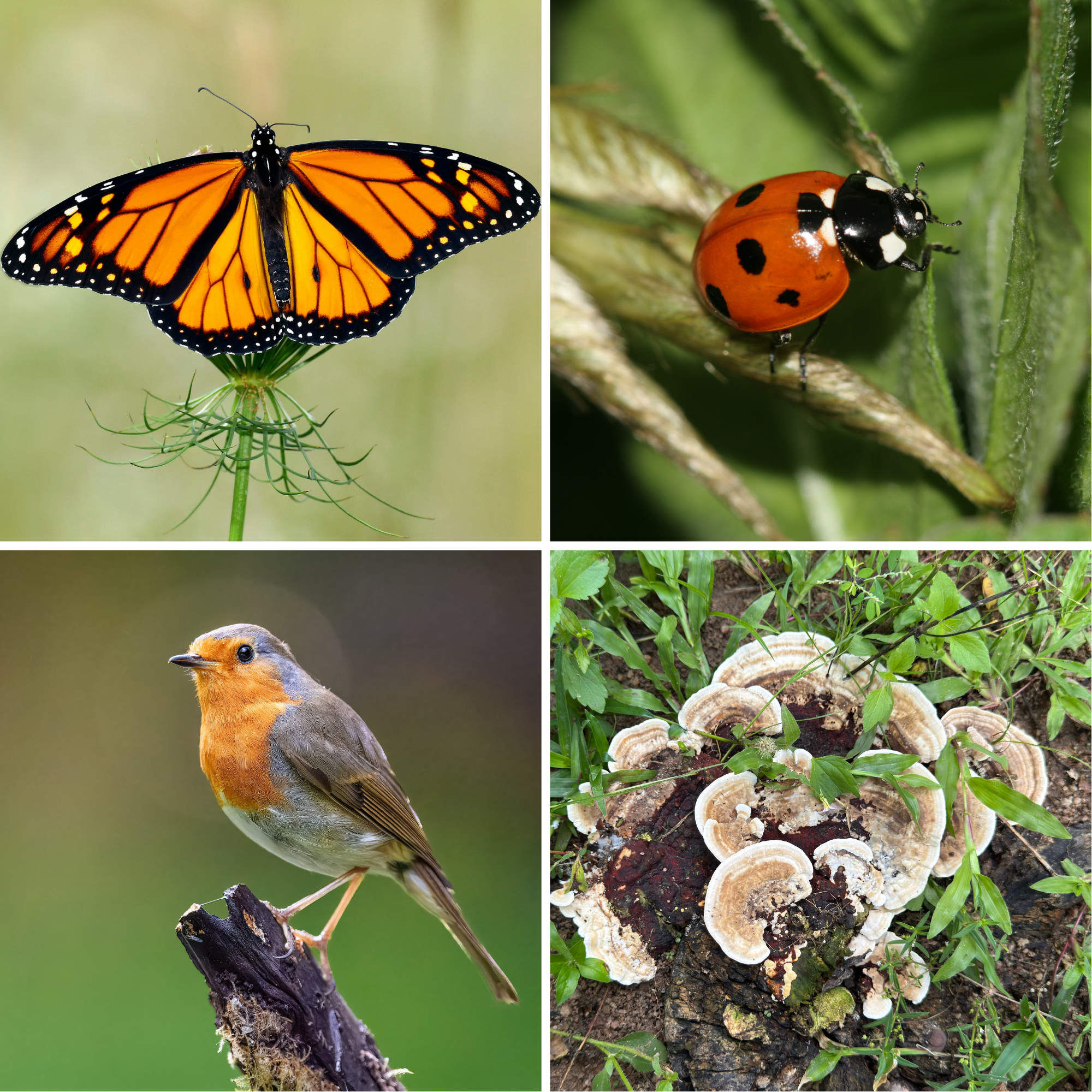
Pollinators: Honeybees, bumblebees (up to six species in the Kansas City area), mason bees, sweat bees, hoverflies, butterflies — especially monarch butterflies (Kansas City sits right on the monarch flyway), moths, beetles
Beneficial insects: Ladybugs, lacewings, ground beetles, praying mantises, fireflies
Birds: Songbirds, woodpeckers, ruby-throated hummingbirds, hawks — look for nests, listen for calls
Fungi and lichen: Mushrooms on mulch, lichen on bark, shelf fungi on dead wood — signs of a healthy soil ecosystem
Wild plants: Weeds, wildflowers, mosses, grasses — especially those growing in or near the orchard without being planted
Other wildlife: Spiders, worms, snails, frogs, toads, squirrels, rabbits — anything wild that calls your orchard home
Pro tip: Check at different times. Pollinators are most active in the morning. Moths and nocturnal insects come out at dusk. Fungi are easier to spot after rain. Fireflies light up at twilight. If you can, visit your orchard at different times of day and in different weather to get a fuller picture of what lives there.
Tips for Taking Great Observation Photos
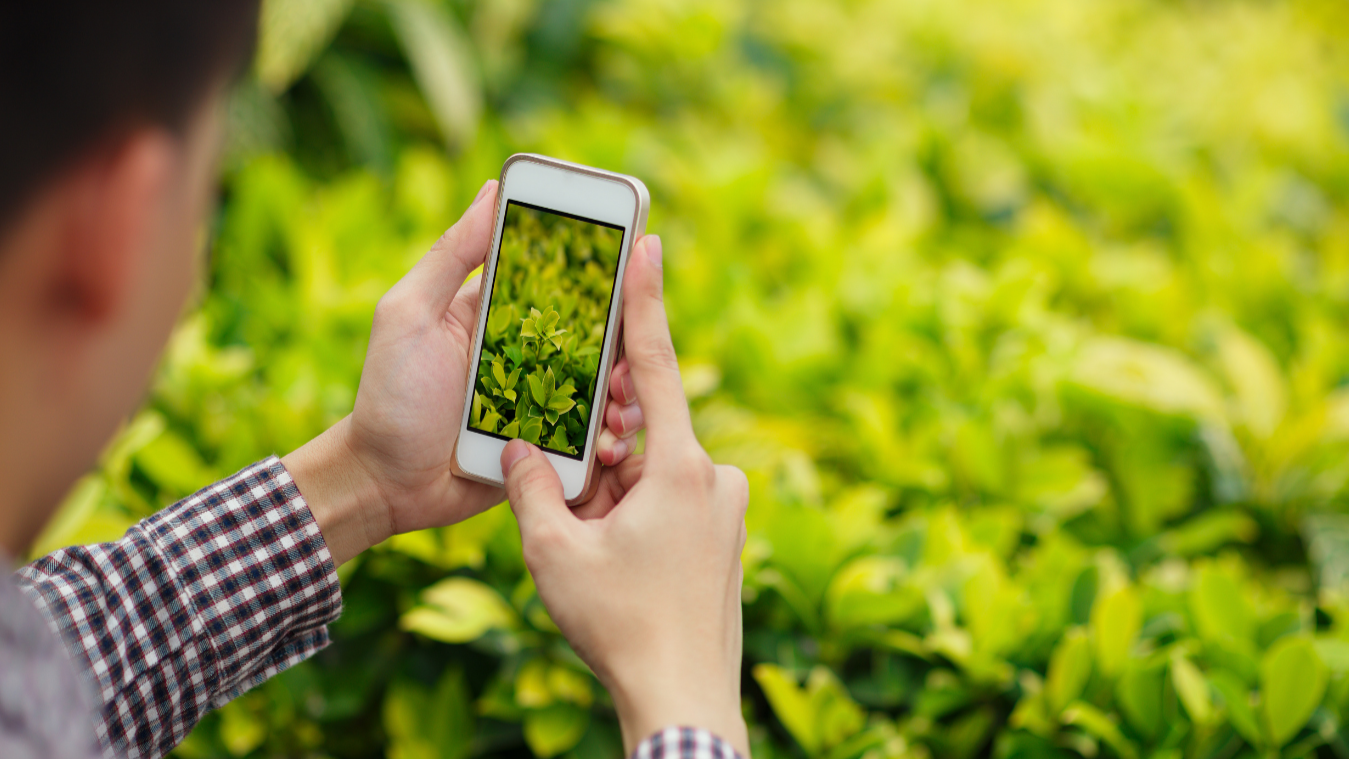
Get close. Fill the frame with your subject. If you can take a step closer, do. Use your phone or camera's zoom if you can't get physically close, but getting closer is always better than zooming in.
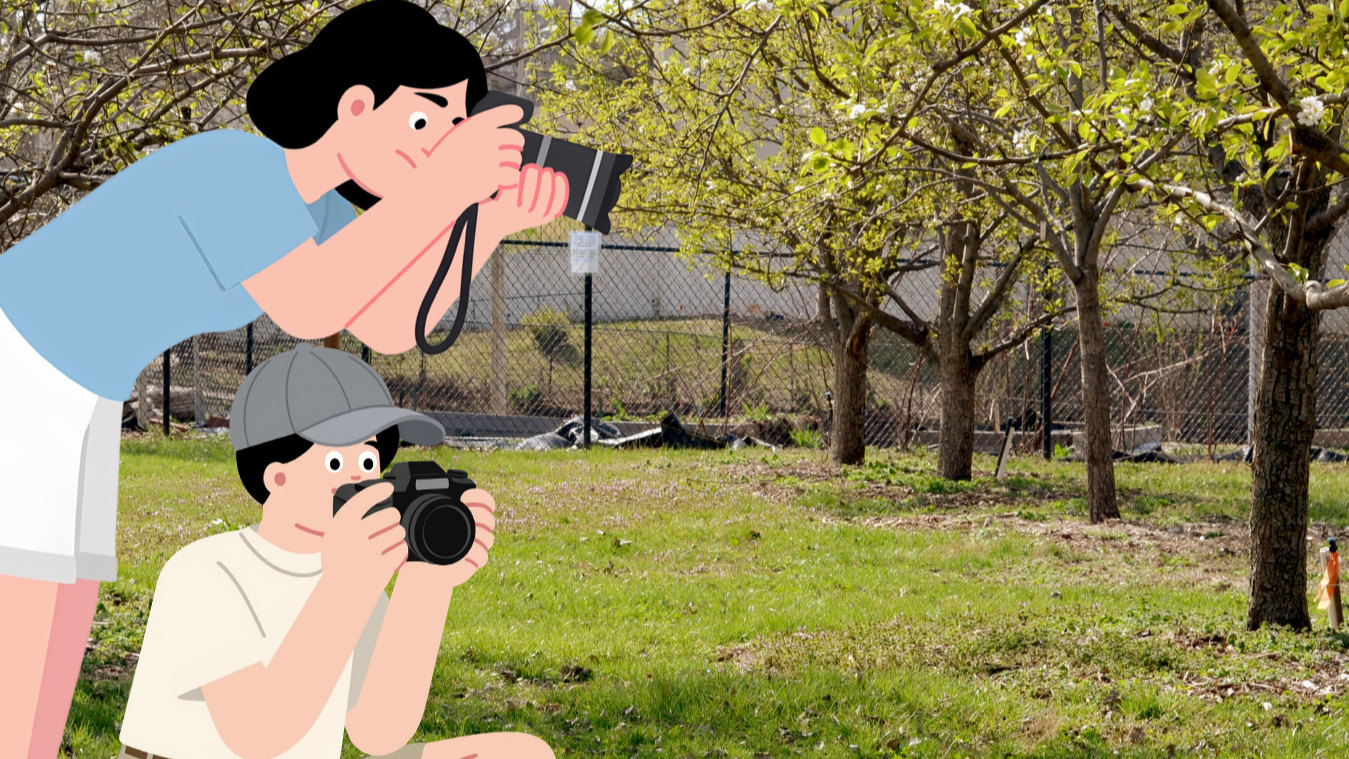
Photograph from multiple angles. Top, side, and front views of the same organism, all added to one observation. For plants: flowers or fruit and leaves. For insects: wings open and closed if possible. For mushrooms: the cap and the underside. Many species can't be identified from a single angle.

Hold steady. Brace your elbows against your body or rest the camera on a surface. Blurry photos are hard to identify. Take a breath, hold still, then tap the shutter.
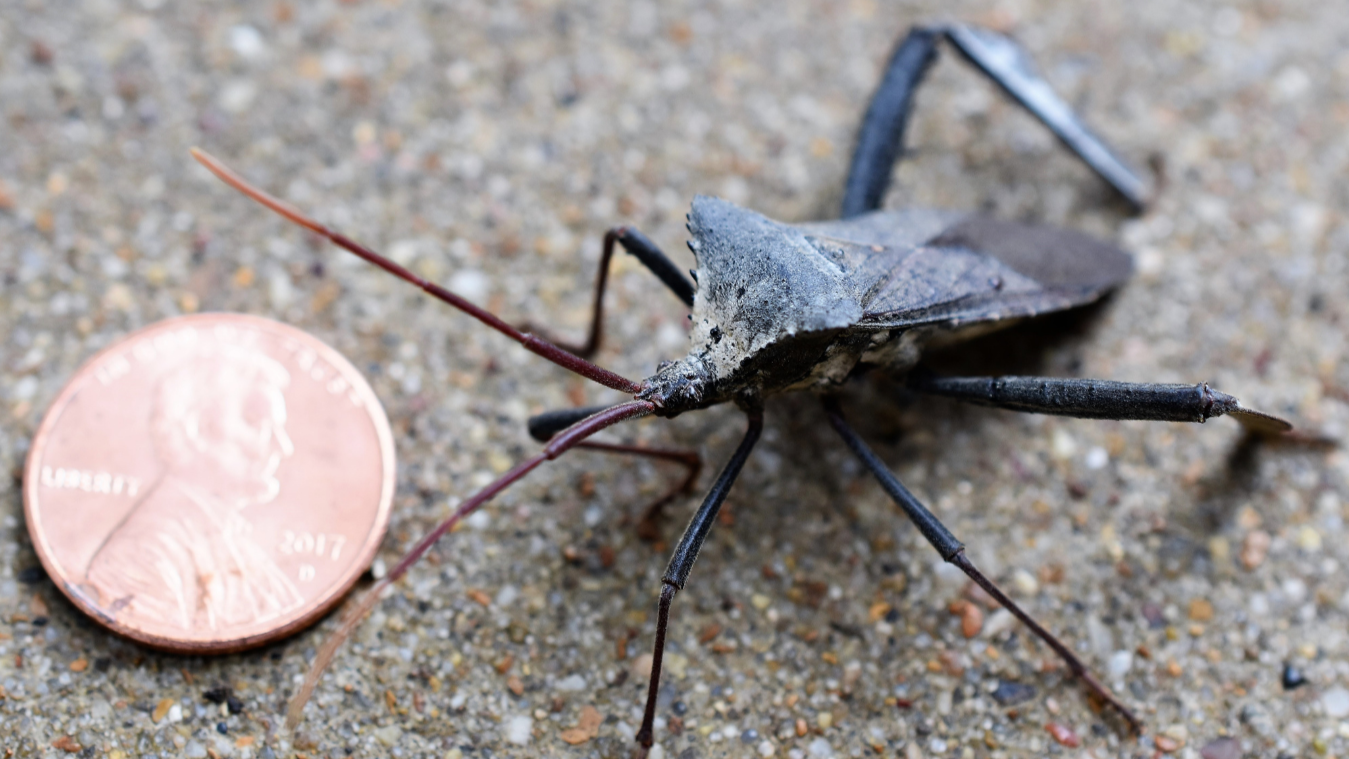
Include scale when you can. A finger, a coin, or a leaf next to a small insect helps identifiers understand size. This is especially useful for tiny things like beetles and flies.
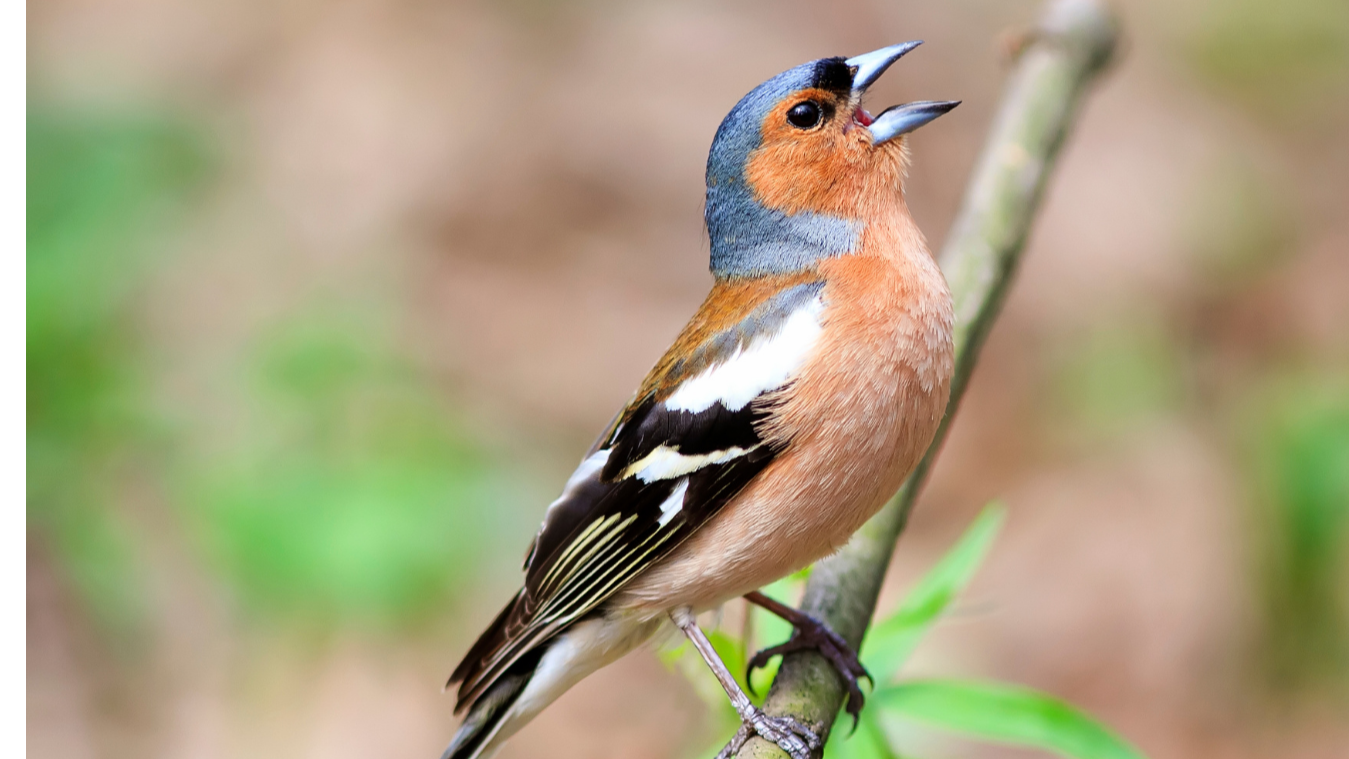
Use your ears, too. iNaturalist accepts audio recordings. If you hear a bird singing or a frog calling but can't see it, record the sound and upload it as an observation. Bird calls are often easier to identify by ear than by a distant photo.
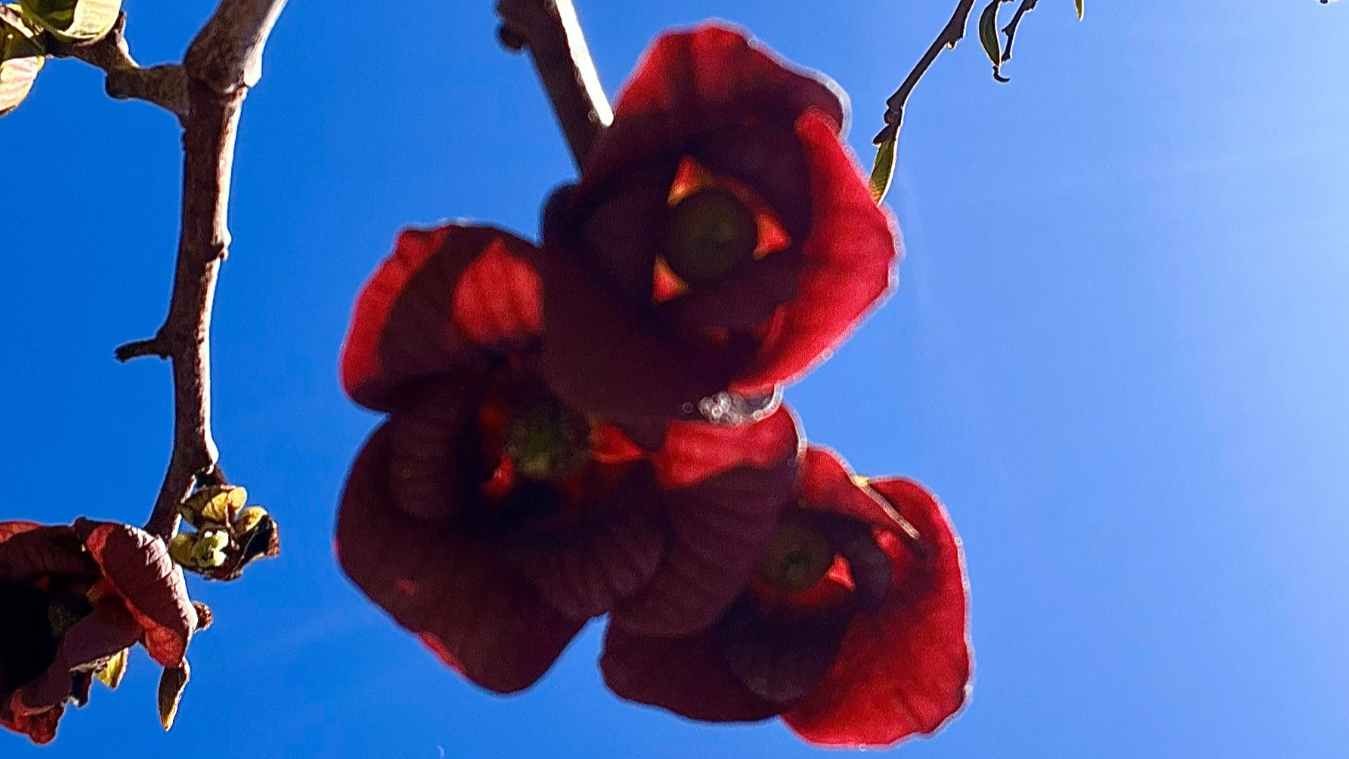
Don't chase perfection. A slightly imperfect photo of something interesting is better than no photo at all. Upload it — the community is remarkably good at working with what they get.
A few things to keep in mind…
Don't disturb, do restore. If you flip a rock or a log to see what's underneath (you should — that's where the good stuff is), put it back the way you found it. Those are homes.
Respect privacy. Don't photograph people's faces, especially children. If your orchard is at a private residence, consider whether you want the exact location visible on iNaturalist — you can obscure the location in your observation settings.
Stay safe. Watch for poison ivy, thorns, and stinging insects. Don't handle wildlife you can't identify. Wear closed-toe shoes and long pants if you'll be poking around in tall grass or mulch.
After the Bioblitz
Your bioblitz doesn't end when people go home. In the days following, the iNaturalist community — a global network of naturalists, scientists, and enthusiasts — will review your observations and help refine identifications. Here's how to make the most of it:
Check back on your observations.
Open iNaturalist over the following week. You'll see notifications when someone identifies or comments on your finds. You might learn that the "little brown bee" you photographed is actually a rare native species.
Share your results.
Tell your Giving Grove community what you found. Post a summary on social media, print a few highlights for the orchard bulletin board, or share your species list at the next steward meeting. People love learning about what's living in their neighborhood.
Make it a tradition.
Run a bioblitz once a season — spring, summer, and fall — and you'll start to see patterns. Which pollinators arrive with apple blossoms? What shows up after the berries set? Over time, your orchard becomes a documented ecosystem.
Use what you learn.
If you discover your orchard has very few native pollinators, consider planting native wildflowers nearby. If you find beneficial predator insects, you know your holistic growing practices are working. The data can guide real decisions about how you care for your orchard.
Resources
iNaturalist — or download the app from the App Store or Google Play Store. Free platform for recording and identifying wildlife observations. Used by millions worldwide.
City Nature Challenge — Annual global bioblitz event, April 24–27, 2026. Find your city and join in.
This guide was developed by Nadina Galle, author of The Nature of Our Cities and founder of Internet of Nature®, for The Giving Grove's Planting Promise Luncheon, April 2, 2026.