
The Missing Ingredient in Successful School Orchards? Investing in People
School orchards are often celebrated for the fruit they produce and the lessons they inspire. But behind every thriving orchard is something less visible: a person making sure the trees are watered, pruned, mulched, and cared for season after season. Through support from the Patrick Leahy Farm to School Grant Program, ReTreeUS and The Giving Grove partnered to explore what happens when that care is not left to chance, but intentionally supported through stipends, accountability, and community connection. The result was more than a successful pilot program. It became a replicable model for how school orchards can flourish for years to come.
Want to learn more about The Giving Grove straight from your inbox? Consider subscribing to our quarterly newsletter!
Written by Sarah Sikich, The Giving Grove, and Rebecka Dykstra, ReTreeUS
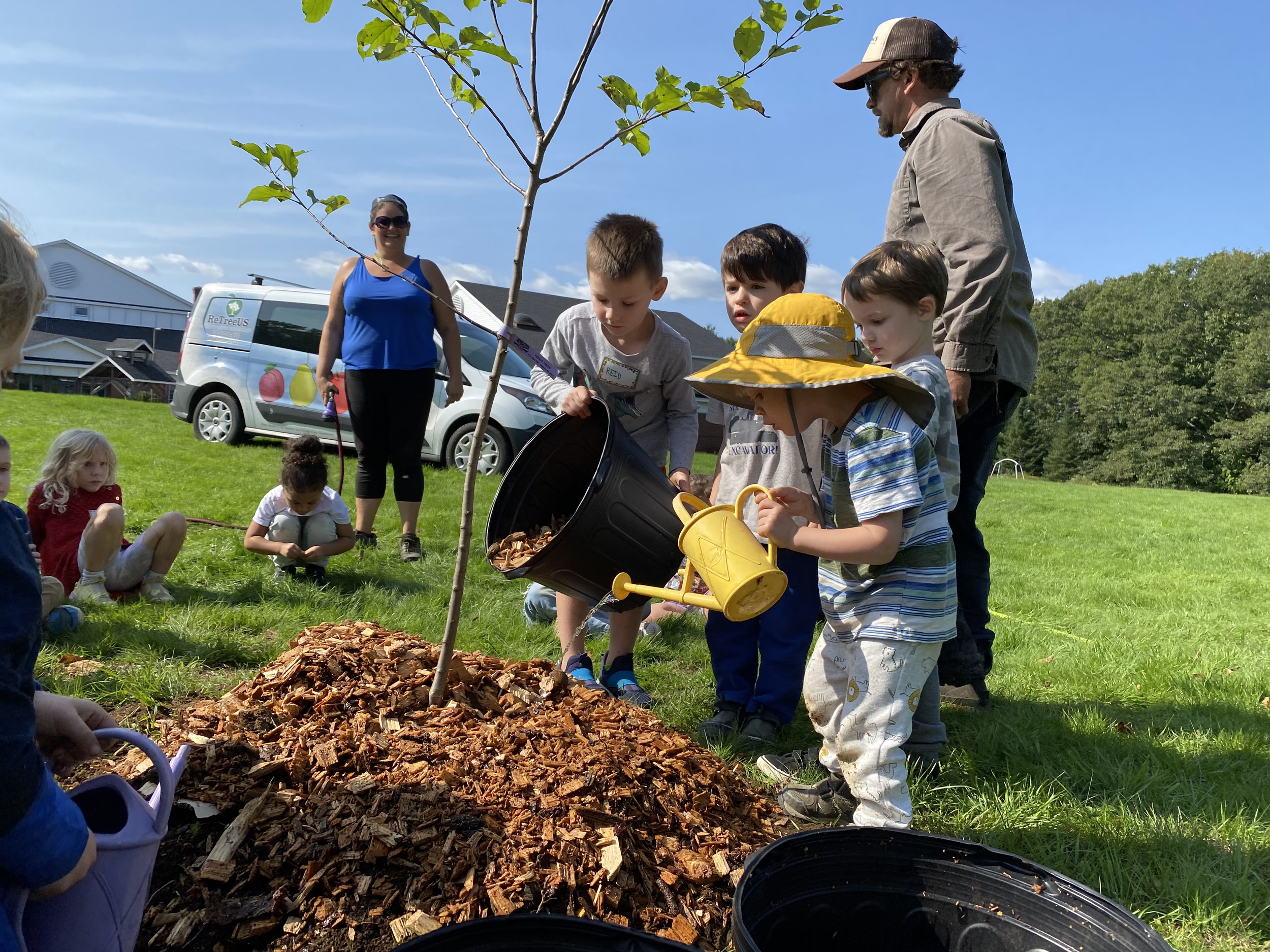
Across the country, school orchards are doing more than growing fruit. They are growing curiosity, stewardship, and a deeper connection to food. But as many programs have learned, the long-term success of an orchard depends on something simple and often overlooked: consistent, dedicated care.
Thanks to support from the Patrick Leahy Farm to School Grant Program, ReTreeUS, in partnership with The Giving Grove, set out to test a model designed to solve that challenge. The result was a pilot program that not only strengthened orchard maintenance but also created a replicable roadmap for schools and organizations nationwide.
Paying for What Matters Most: People
At the center of this initiative was the Orchard Caretaker Stipend Program. ReTreeUS recognized that while they could provide trees, tools, and technical guidance, the real key to a thriving orchard is the person tending it day in and day out.
Before this program, ReTreeUS had no paid orchard caretakers. Through the grant, that changed dramatically. A total of 45 caretakers began receiving stipends, each earning between $1,000 and $2,000 annually, depending on the size and needs of their orchard. Smaller school orchards received $500 in the spring and $500 in the fall, while larger community orchards received $1,000 per season.
Importantly, these stipends were not intended to cover supplies. They were designed to compensate individuals, often teachers, for their time and stewardship. Orchard care doesn’t neatly fit into a school day. It happens after hours, on weekends, and during school breaks. By paying caretakers for this labor, the program acknowledged that maintaining a productive orchard is real work, not just volunteer effort.
The Reality of Orchard Care
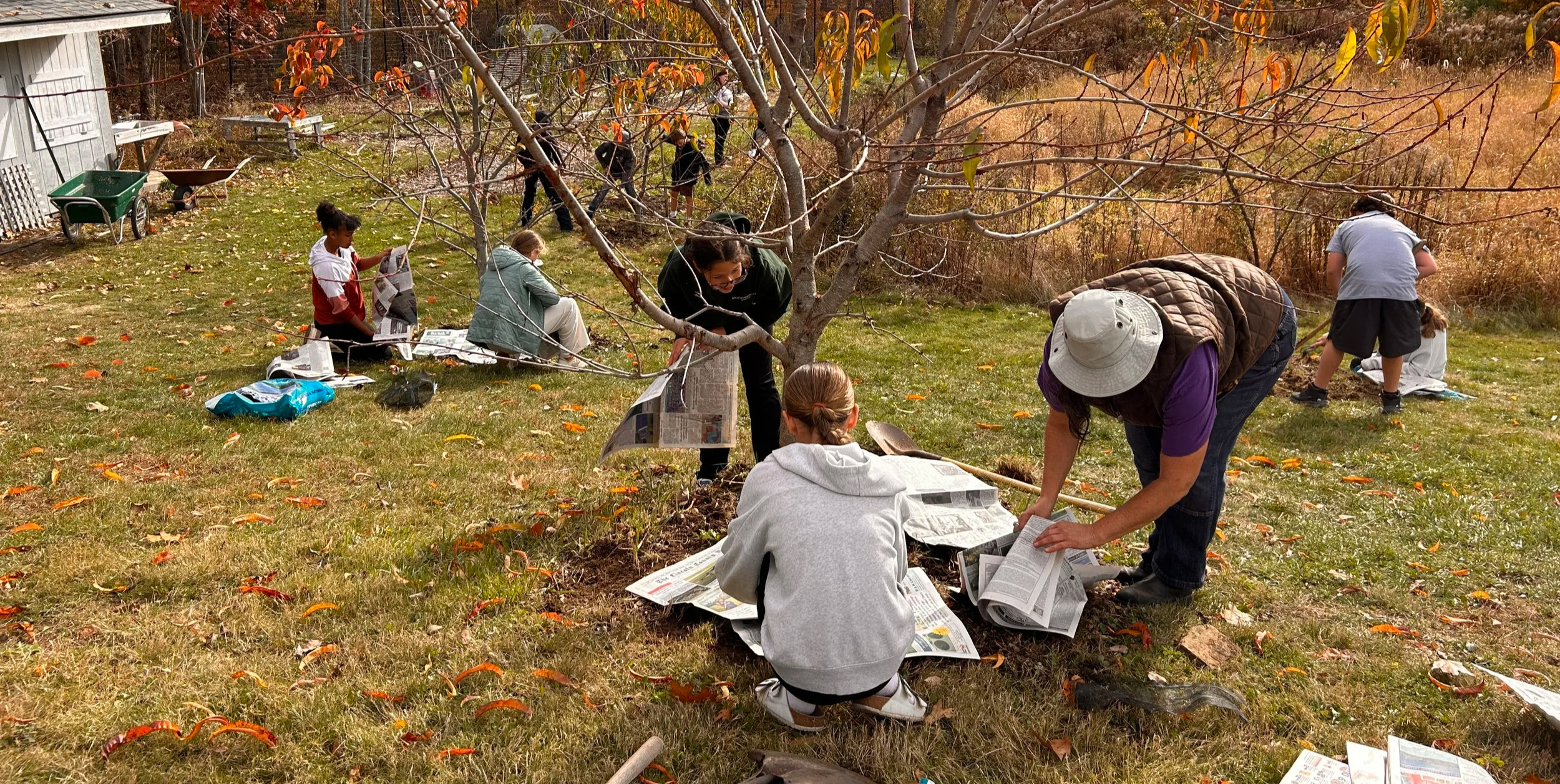
Fruit trees are generous, but they are not low-maintenance. Each orchard requires up to 50 hours of labor per season, depending on its size, age, and condition. Tasks include pruning, mulching, watering, pest management, and coordinating volunteers or student involvement.
For educators already balancing full workloads, this responsibility can quickly become overwhelming. The stipend program helped shift orchard care from an added burden to a supported role. Caretakers could plan, prioritize, and invest in the orchard knowing their time was valued.
Accountability That Builds Connection
A defining feature of the program was its built-in accountability. To receive their stipends, caretakers completed seasonal maintenance checklists and submitted reports documenting orchard health, tasks completed, student engagement, and harvest outcomes.
This reporting structure did more than track progress. It opened the door to stronger communication. Through regular check-ins, ReTreeUS gained insight into what was happening on the ground across its network of over 100 schools. Caretakers shared challenges like unpredictable weather, pest pressures, and limited time, alongside successes such as increased student participation and meaningful harvests. This feedback loop created a more responsive system. Instead of operating in isolation, caretakers became part of a connected network, learning from one another and contributing to a shared understanding of what works.
An Unexpected Outcome: Workforce Development
While the program was designed to support orchard maintenance, it also created something more: a pathway for workforce development. By compensating hands-on agricultural work, the program allowed caretakers to build skills in horticulture, project management, and community engagement. For some, this formalized experience may open doors to future roles in urban agriculture or environmental education. In this way, the orchards became not just spaces for student learning but also platforms for adult skill-building and professional growth.
Designed to Last: Funding Beyond the Grant
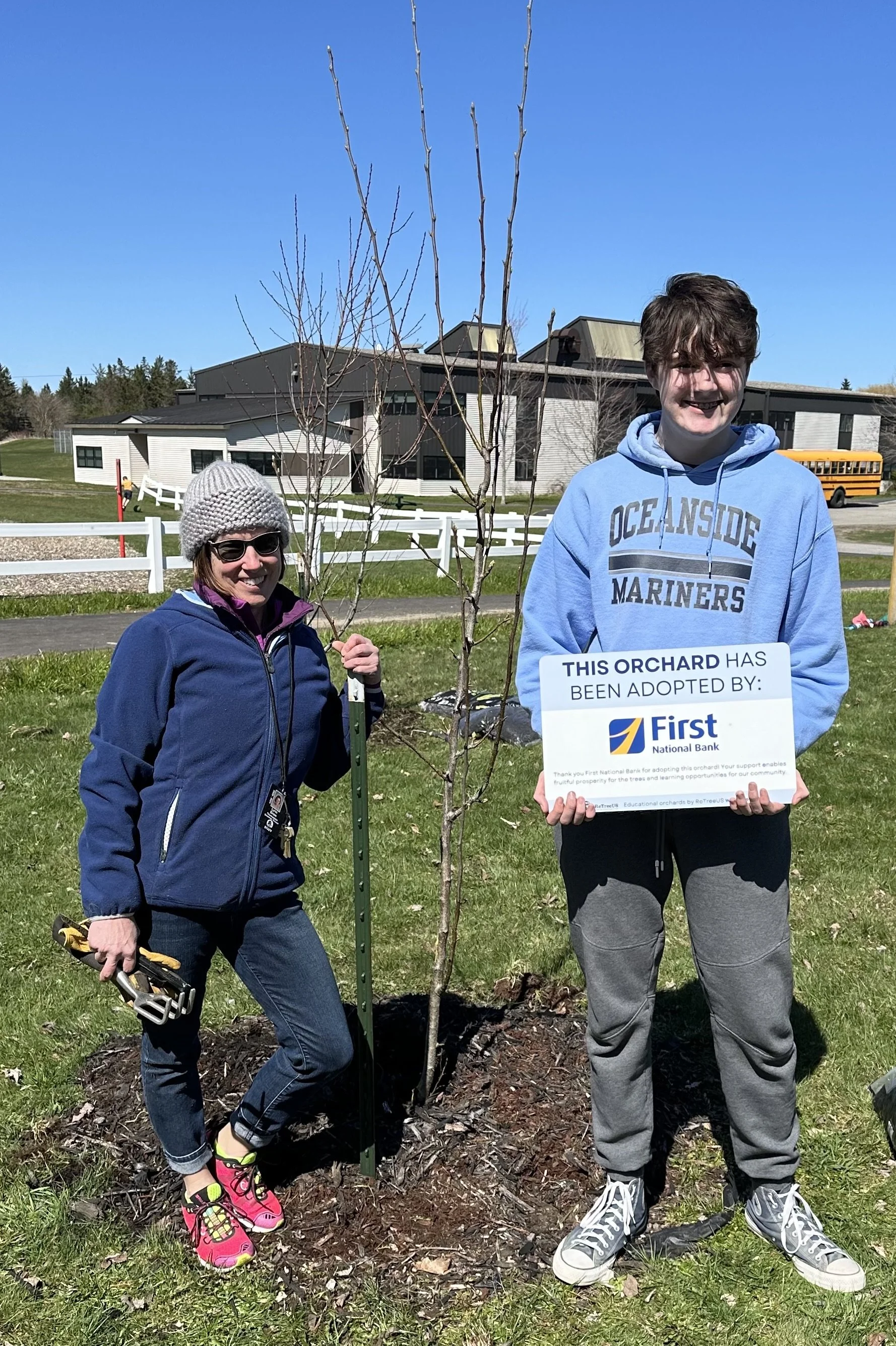
From the beginning, sustainability was a priority. Grant funding can spark innovation, but long-term success depends on what happens next. To continue the stipend program beyond the grant period, ReTreeUS is developing a “plug-and-play” fundraising model that schools can easily implement. One key strategy is a blueberry bush fundraiser, allowing community members to purchase plants while directly supporting their local orchard program. The model also includes opportunities for orchard adoption, where local businesses, clubs, and organizations can fund the ongoing care of an orchard. Developed with the broader mission of expanding food production beyond the schoolyard and into the community, both approaches build local ownership and connections while ensuring these living classrooms continue to thrive.
Supporting the Classroom Alongside the Orchard
In addition to the stipend program, ReTreeUS and The Giving Grove partnered with KidsGardening to create a suite of educational resources designed specifically for school orchards. These resources include ten interactive, curriculum-aligned modules delivered as ready-to-use presentations. Each module is designed to be accessible, engaging, and easy for educators to implement without additional preparation.
The materials have been peer-reviewed and are publicly available. Educators can access them for free, while the general public can use them through a suggested donation model. By removing barriers to high-quality content, this resource hub ensures that orchard-based learning can thrive alongside orchard maintenance.
A Model for Replication
One of the primary goals of this project was to create a system that could be replicated across the country. Through this pilot, several key lessons emerged:
Invest in people. Paying caretakers leads to more consistent and effective orchard care.
Structure matters. Clear expectations and reporting systems support accountability and program success.
Communication is critical. Regular feedback strengthens both relationships and outcomes.
Plan for sustainability early. Fundraising models should be built alongside program implementation.
Pair maintenance with education. Orchards are most impactful when they serve as both food sources and learning environments.
Growing a National Movement
Through ReTreeUS’s leadership and collaboration with The Giving Grove and KidsGardening, this project has laid the groundwork for a new standard in school orchard programs. What began as a regional pilot is now a nationally shareable model, supported by resources, data, and real-world experience.
At its core, this work reinforces a simple idea: when we invest in the people who care for our shared spaces, those spaces flourish. And in the case of school orchards, that means more fruit on the trees, more students engaged in learning, and more communities connected to the land and to each other.
About the Authors
Sarah Sikich is Director of Marketing & Communications at The Giving Grove, where she leads storytelling, brand strategy, and national campaigns that amplify the power of community orchards. A longtime advocate for urban horticulture, she blends creativity and data-driven strategy to inspire action and celebrate the growing Giving Grove network.
Rebecka DyKstra is the Communications Coordinator at ReTreeUS. For over a decade, she has been shaping mission-led marketing, outreach, and communications strategies for brands and nonprofits, building community partnerships, leading events, and connecting people to place and purpose. A lifelong gardener, she is passionate about ReTreeUS’ mission to engage the next generation of food growers, environmental stewards, and problem-solvers through experiential learning in orchards and gardens.