
What's Geography Got to Do with It?
When we think about growing fruit trees, it’s easy to focus on what happens in the orchard itself: sunlight, soil, pruning, and pollinators. But many of the forces shaping what we can grow, and how successfully we can grow it, begin far beyond the garden gate. In this piece, Giving Grove Horticulturist Matt Bunch explores how geography, rainfall patterns, and shifting climate conditions influence everything from pest pressure to fruit production across the United States. By understanding the relationship between place and plants, growers can make more informed choices and better prepare for the changing realities of orchard care.
Want to learn more about The Giving Grove straight from your inbox? Consider subscribing to our quarterly newsletter!
Written by Matt Bunch, Giving Grove Horticulturist
Courtesy of This is Yellowstone
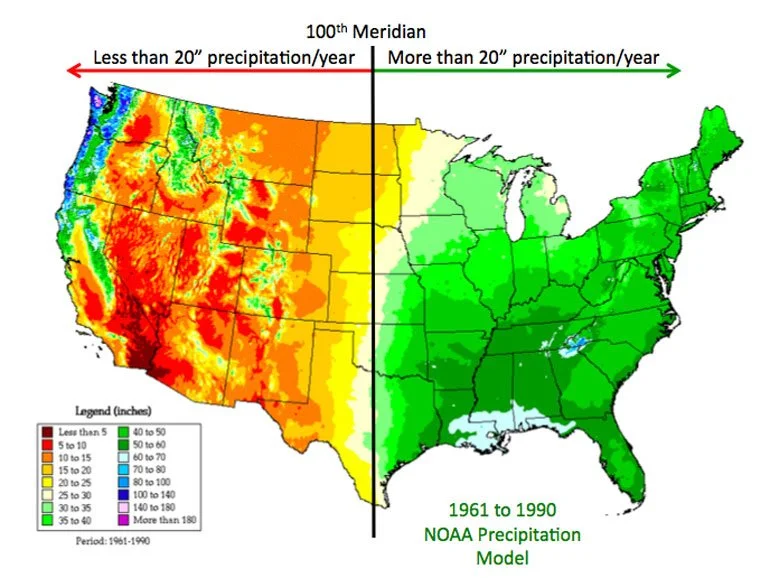
Growing up in Eastern Kansas, many of our family vacations involved going out west to areas of dramatic topography and geography, mountains, and deserts. This inevitably involved a long road trip. For those of you not accustomed to 8-12 hour drives, this is a rite of passage, and how we pass the time here in the middle. It was during these road trips, straining my eyes to see peaks on the horizon, that I also noticed the changes in vegetation. Something profound was happening, and not with the cultivated areas of towns and farms, supported by ancient waters buried deep. But rather the native vegetation. Trees became scarce, shorter and windswept; where trees became scarce, grasses took over; as grass became shorter, yucca, cholla, and sagebrush became more dominant. This phenomenon, due to geography, and then weather, has a name, The Hundredth Meridian.
What is the Hundredth Meridian?
The Hundredth Meridian, known as 100˚ west longitude, was brought into the collective consciousness by geologist, Director of the United States Geological Survey, notable river runner, and general character, John Wesley Powell, in the 1870s. Powell noted, as many had millennia before, that vegetation and precipitation changes as one travelled west, and the 100th meridian (geographic standardization was still relatively new) was a convenient dividing line in which to note that change. West of 100, rainfall rates became lower, due to the geography of the Rocky Mountains, Cascade and Coastal Ranges, basins, and the resultant rain-shadows. East of 100, humid moist air pulled up from the Gulf of Mexico dictates the weather. Imagine a line running from Laredo, Texas, north to the Canadian border. Everything east of that line gets over 20” of precipitation per year, and everything west of that line (up to the Cascade and Coastal range) gets under 20” per year. Enter, The Humid East and the Arid West. (For more on this concept and the steady movement east of the arid zones, this paper from 2018 is fascinating.)
East vs West
Being in an area of 38-40” of annual precipitation, Kansas City definitely qualifies as the humid east. Moist gulf air collides with cool, dry air coming in from the Rockies, thunderstorms form, a cycle that repeats, and then spreads east through the Mississippi and Ohio Valleys to the Eastern Seaboard. Our eastern deciduous forests, native flora and fauna, and livelihoods depend upon this precipitation. This rain also happens during the growing season, when trees are in full leaf and fruit. If you know about fruit trees, you know that many “traditional” fruits would rather be drier than wetter. Pears, apples, cherries, peaches, plums, and more are susceptible to more fruit splitting, fungi, and diseases in wetter areas. The biology is simple: the longer something stays wet, the more it decays. (For more on this, look up “leaf wetness duration”.) As an aside, Seattle also gets around 38-40” of annual precipitation. However, ¾ of this comes in the fall and winter, and not during the prime growing season, so there is less fungal and disease pressure. Insect pests also thrive in wetter conditions. More foliage means more food; moist arable soil is easier to pupate in; more heat and humidity also mean increased chances for more generations per year.
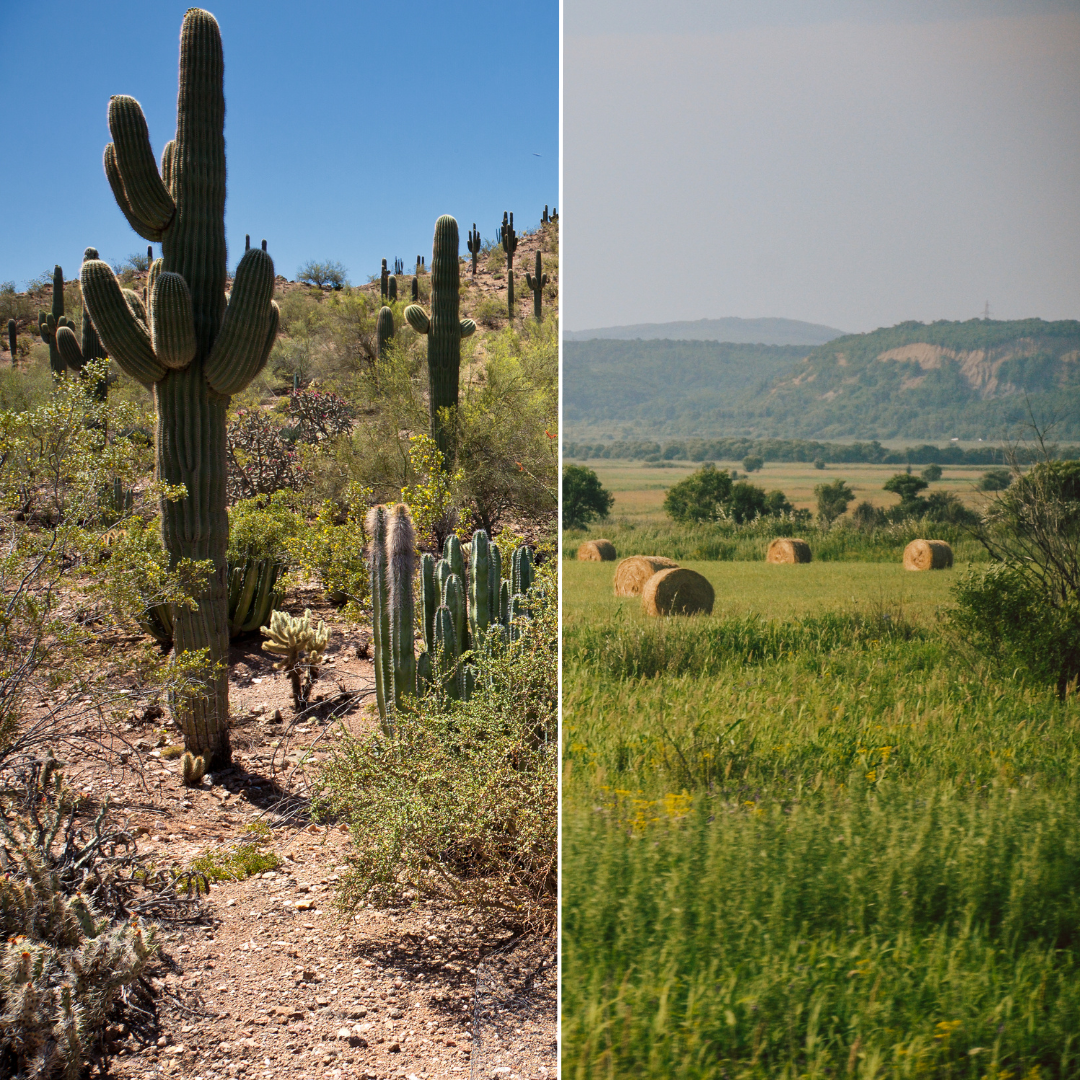
These challenges with rain and humidity are why a majority of our fruit crops are grown in the arid West. Geographically, it has also been more difficult for many pests to traverse the great prairies and deserts into the more arid growing areas. However, commerce and travel are a constant vector. Nearly 2/3rds of apples grown in the US are grown in the rain shadow of the Cascades in east central Washington, areas that get 8-10” of rain per year. A majority of US peaches are grown in California. The same is true for grapes, sweet cherries, pears and more. All these crops rely on the natural low humidity during the growing season, relatively low pest pressure, AND access to irrigation water. If you follow western agriculture, water is becoming scarcer as snow-packs dwindle, and reservoirs and aquifers dry up. Western growers are also faced with increased heat, which can stress trees and resultant sunburn on the fruits, which can make crops unmarketable. And then there is wildfire smoke.
A Look to the Future
This is not a lose-lose, but the challenges are real. We are farmers and growers, hopeful for tomorrow. We can still grow fruit crops; we just need to be more nimble. For those of us in the east, we need to reevaluate susceptible varieties. Yes, there will always be chemicals and sprays (organic or synthetic) that will be developed. But we need to breed and select for varieties that have resistance to diseases and fungi, and even insect pests. We also need to lean into our native fruits, the Persimmons, Pawpaws, Elderberries and more. Some universities and cooperative programs are doing this, but we need to continue to fund more research and development as our climate changes, and we navigate a more humid east and an expanding arid west.
About the Author
Matt Bunch’s love for plants and gardening grew from the gardens of his parents and grandparents. Schooled as a history major, Matt has worked in the horticulture profession since 1994 in retail, municipal, and public garden capacities. From 2004 to 2013, Matt was with Powell Gardens (Kansas City’s Botanical Garden), first as a Native Plant Landscape Specialist, then as the Horticulturist for the 12-acre Heartland Harvest Garden edible landscape. Matt continues to garden at home with his family, is always in search of the next champion tree, and by informal count, has planted close to 10,000 trees. Matt has been with The Giving Grove since 2013.