An Apple Tree Worth Watching
When a child helps plant an apple tree, every trip past it becomes a chance to see what has changed. At Temple Shalom Justice Garden in Dallas, Ruth’s daughter is watching the tree she planted with her mother and looking forward to the apples. Around her, volunteers are learning to care for an orchard, growing food to share, and getting to know neighbors who have joined them in the work. This story offers a look at a congregation putting its values into practice on the land around its temple, and the unexpected gifts people find when they grow something together.
Want to learn more about The Giving Grove straight from your inbox? Consider subscribing to our quarterly newsletter!
Contributed by Sarah Sikich, Director of Marketing & Communications
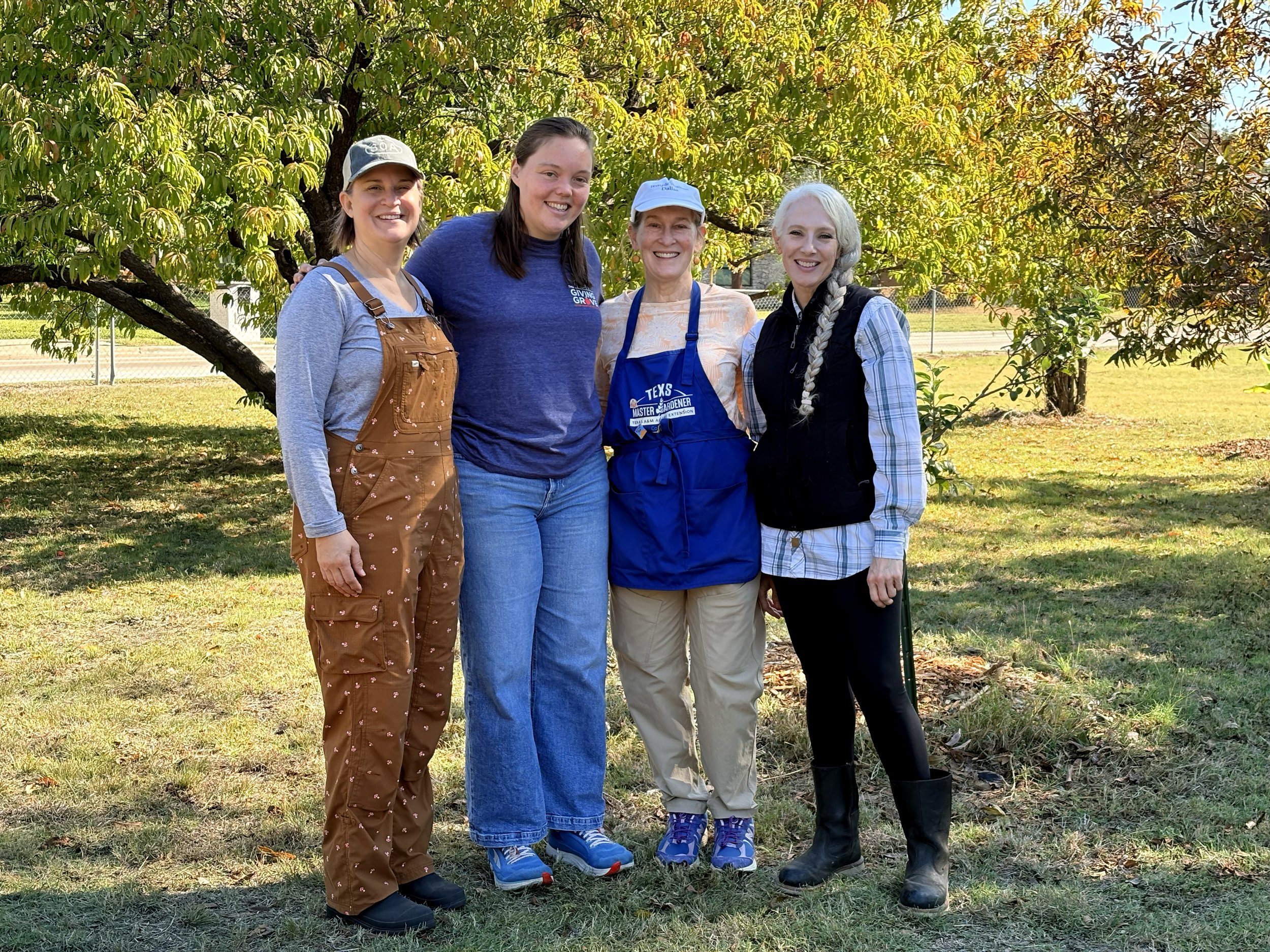
Every time orchard steward Ruth and her daughter drive past the orchard at Temple Shalom in Dallas, her daughter checks on a tree she helped plant.
“My daughter helped me plant one, and every time we drive by, she talks about how big the tree is getting and how she can’t wait to eat the apples off of it,” Ruth says.
For a child waiting for apples, a growing season can feel like a long time. But already, she has a reason to notice that tree, watch its branches, and imagine what comes next. She helped put it in the ground. Now she gets to watch it grow.
That anticipation has become one of the unexpected pleasures of the young orchard at Temple Shalom Justice Garden. Children helped clear the space before the trees were planted, and Ruth’s daughter joined her in planting. As the trees grow, the children are already thinking about the fruit.
The adults are learning alongside them. They are figuring out how to care for apple and pomegranate trees, asking questions, and beginning to see the land around their congregation differently.
A Place to Put Their Values into Practice
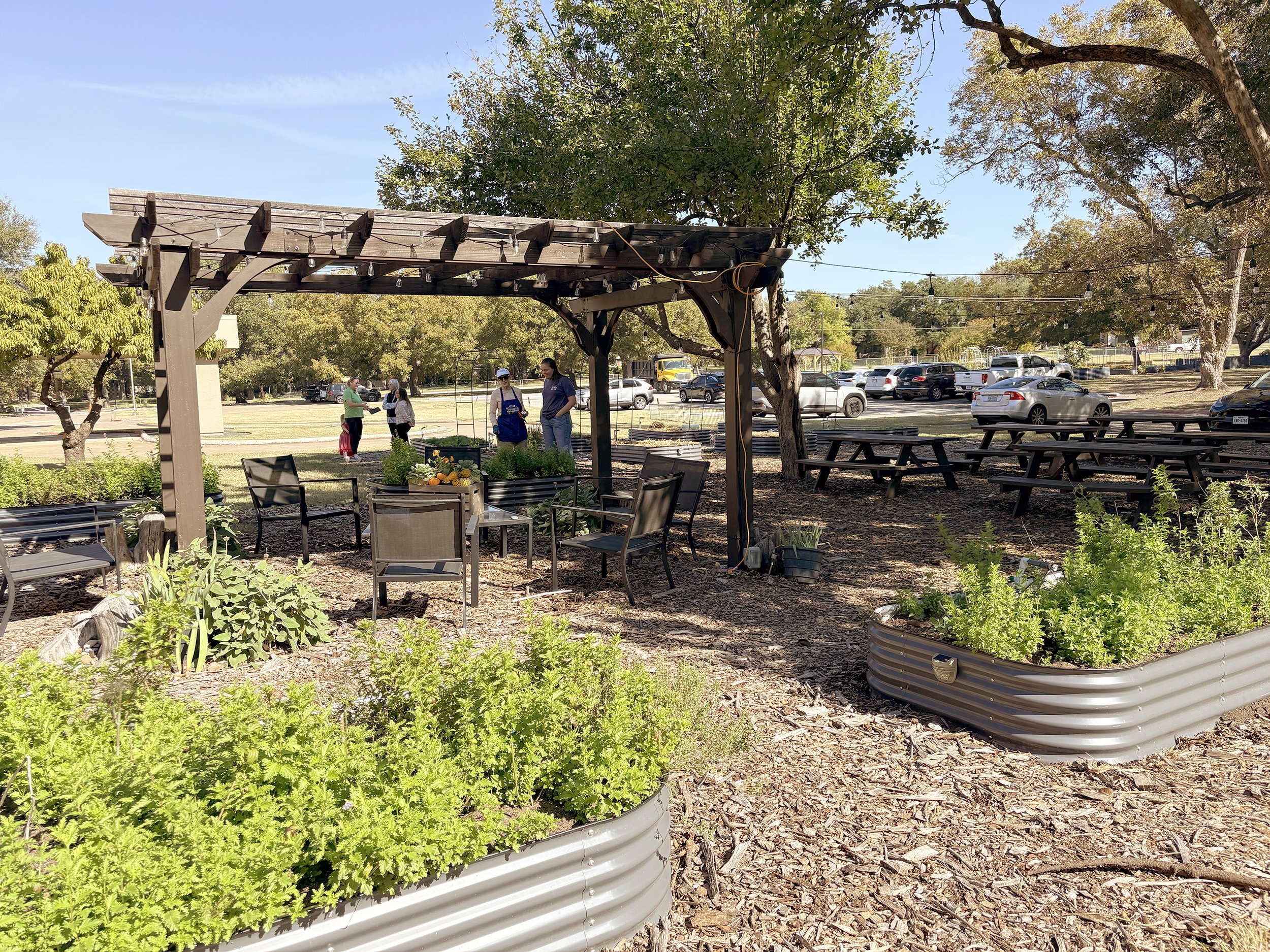
The Justice Garden began in the spring of 2022 with a small school garden, where growing food became part of classroom learning. In 2024, volunteers expanded the project with a food justice farm dedicated to growing produce for donation. The orchard followed in January 2025.
The congregation had wanted a community garden for some time. What moved the idea forward, fellow orchard steward Peggy explains, was a group of people ready to talk about what they could do with the space around their temple and what it would take to make a meaningful contribution to the wider community.
Volunteers now harvest food for North Texas Food Bank-affiliated pantries and partner with nearby Church of the Transfiguration to reach families in the community. They also share herbs and respond to requests from other organizations when they have produce available.
Jewish teachings guide decisions about how they grow, from caring for the soil to choosing crops. Apples, figs, and pomegranates connect the growing space with their cultural and religious traditions. Perennial food crops also fit their commitment to caring for the land over time.
“The land is ours to care for,” Peggy says.
That care is shared. A committee of garden volunteers helps make decisions, a volunteer team does the work, and congregation leaders provide oversight. The garden reflects the people who have chosen to take responsibility for it.
Learning to Care for an Orchard
Adding fruit trees gave the volunteers another way to grow food for their neighbors. It also meant developing new skills.
Ruth and her fellow orchard stewards partnered with Grow North Texas, Giving Grove’s local affiliate, because they wanted education and continuing support. As questions come up, they have people they can turn to for help.
“They’ve given us all kinds of great educational resources in terms of handbooks and orchard books,” Ruth says. “So, they’re just there to support us.”
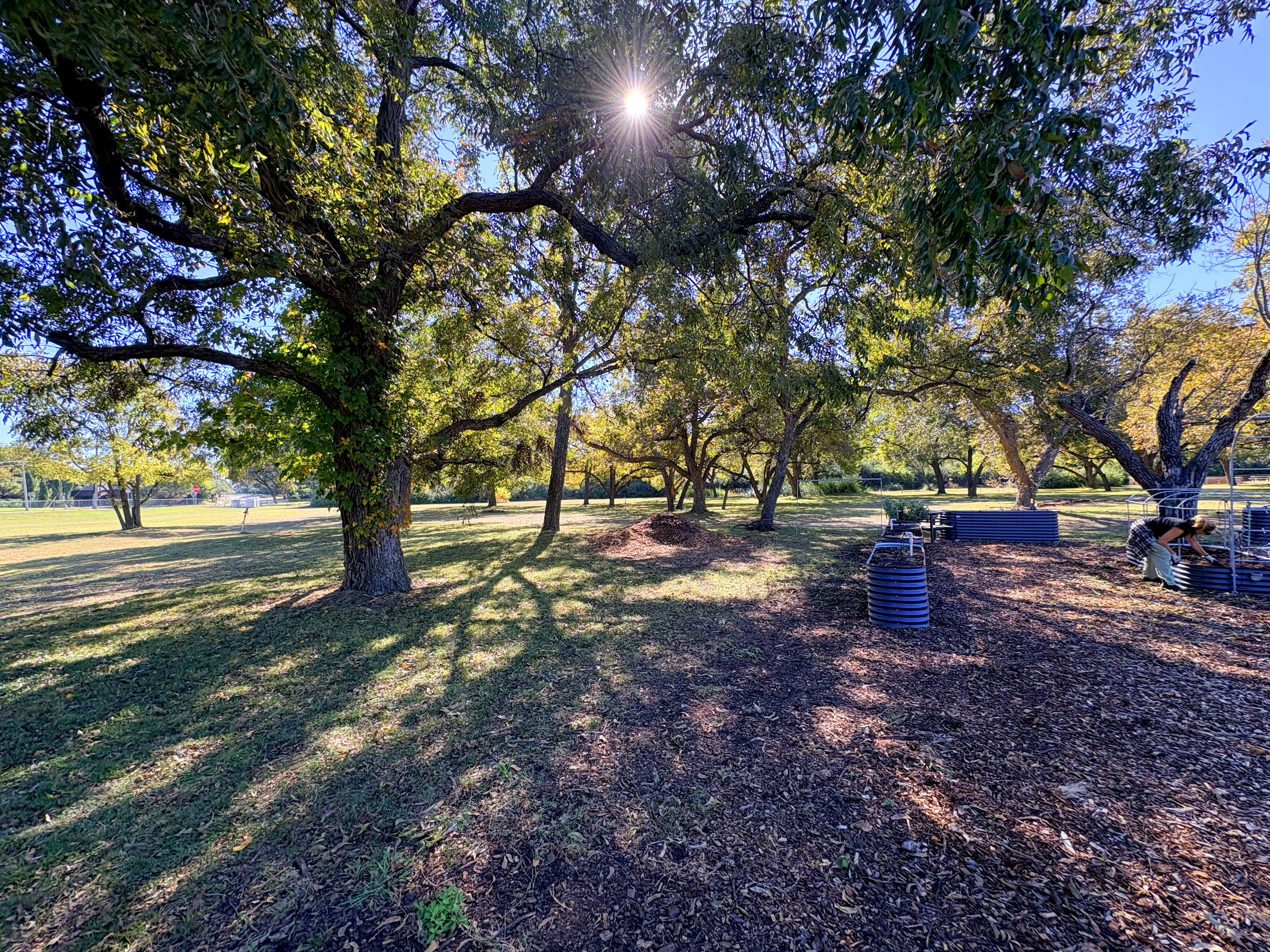
The learning has changed how the stewards look at the property. Alongside the new fruit trees stands a historic pecan orchard that was there before the temple was built. Community members still come to gather pecans, and the garden team hopes to restore the grove and improve its productivity.
Their plans also include berries and grapes, an expanded school curriculum, and spaces where people can walk, spend time outdoors, and enjoy the trees. The orchard is becoming part of a larger vision for how the congregation’s grounds can serve its community.
The People Who Keep Coming Back
One of the things that has surprised Peggy most is how many people have joined the garden from outside the congregation. About half the volunteers are not Temple Shalom members. They hear about the work through neighbors and conversations, then decide to take part.
Working together to grow food has given people who might not otherwise have met a reason to get to know one another. They share the tasks, learn together, and contribute to something beyond themselves.
“I think that’s sort of the gift that the garden gives back to us,” Peggy says.
For Ruth, those gifts include time spent learning with her daughter and the pleasure of hearing her notice how much a tree has grown. The apples will come in their own time. Until then, every drive past the orchard offers something to talk about and something to look forward to.
About the author
Sarah Sikich is Director of Marketing & Communications at The Giving Grove, where she leads storytelling, brand strategy, and national campaigns that amplify the power of community orchards. A longtime advocate for urban horticulture, she blends creativity and data-driven strategy to inspire action and celebrate the growing Giving Grove network.