
For Jim, the Pawpaws, and the Charlie Brown Pecan Tree
Community orchards are often celebrated for the fruit they produce, but some of their most meaningful harvests are much harder to measure. At Fisher Park in Kansas City’s Rosedale neighborhood, a small orchard tucked between a playground, basketball court, and nature trail has become a gathering place for neighbors, volunteers, and curious passersby. Through stories of stewardship, unexpected connections, and one remarkably resilient “Charlie Brown” pecan tree, this orchard demonstrates how community engagement transforms a collection of trees into something much greater.
Want to learn more about The Giving Grove straight from your inbox? Consider subscribing to our quarterly newsletter!
Contributed by Ashley Vernon, Co-Executive Director, The Giving Grove
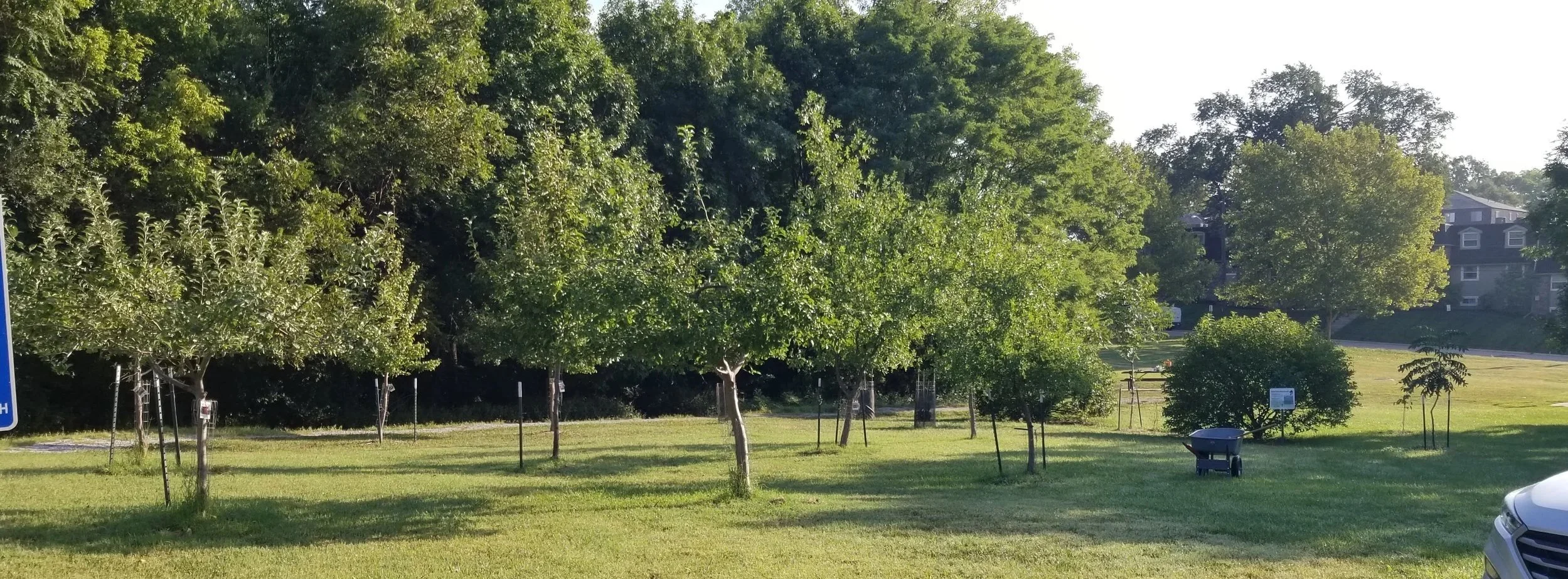
A Walk Through Fisher Park
“And this... is the Charlie Brown pecan tree…”, the former steward of the orchard gestured towards the saddest looking lopsided, broken tree. I laughed, but she eyed me seriously. “This must stay! I believe in it!” I made a note to get some deer protection around the scraggly pecan, and continued my 1st tour of the Fisher Park orchard in Rosedale, KS.
It was 2021, and my wife and I had just purchased a house walking distance from the orchard. While my day job as Co-Executive Director of The Giving Grove influenced my choice to hop onto the stewardship team, I also truly love the hands-on horticulture aspects and neighborhood connection stewarding such a space can bring.
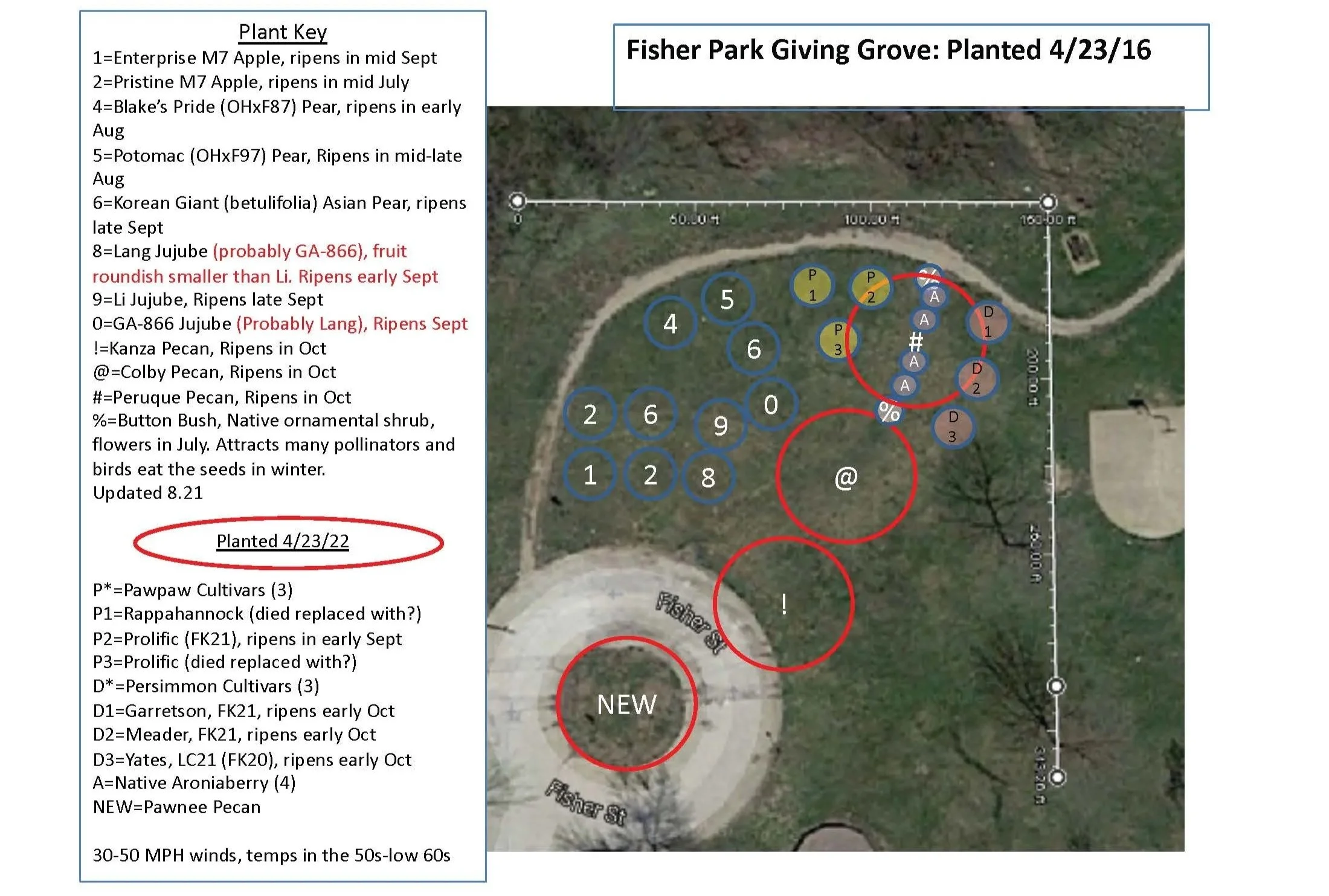
This orchard is tucked behind a circle drive, next to a basketball half-court, a vibrant playground, and right near an entrance to the Rozarks Nature Trail. This unassuming group of trees was planted in 2016 with the support of Kansas City Community Garden’s Giving Grove program, Rosedale Development Association, and Wyandotte County Parks and Recreation. Today, the orchard has 17 fruit and nut trees. There are apples, pears, Asian pears, jujubes, persimmons, pawpaws, pecans, aronia berry shrubs, and two large button bushes (native ornamental shrubs that attract many pollinators and birds).
Meet the Steward Team
Over time, I’ve gotten to know the key players in this orchard’s care, and they all come from unique backgrounds. The main co-steward is Jim. Jim is in his late 80s, and while he doesn’t do a lot of physical labor anymore, he is always reporting orchard happenings. Here are some examples of his reports:
“Parks still hasn’t turned the water on, what’s that number again?”
“The pawpaws got damaged in the storm, should we replace them?”
“I’m making applesauce with these, because I can’t bite into a damn apple anymore.”
All very helpful, as you can see.
Jim always has a story for me, and the community knows him and looks out for him. We know all about his grievances with the price of cat food on a fixed income. We know he is an artist who paints vintage women with vintage cars, and that the Rosedale Development Association has helped get his art into neighborhood art shows. We know that his house is the dark blue one, a block and a half away from Fisher Park. A collective space like this brings connection that spreads beyond the physical contact point.
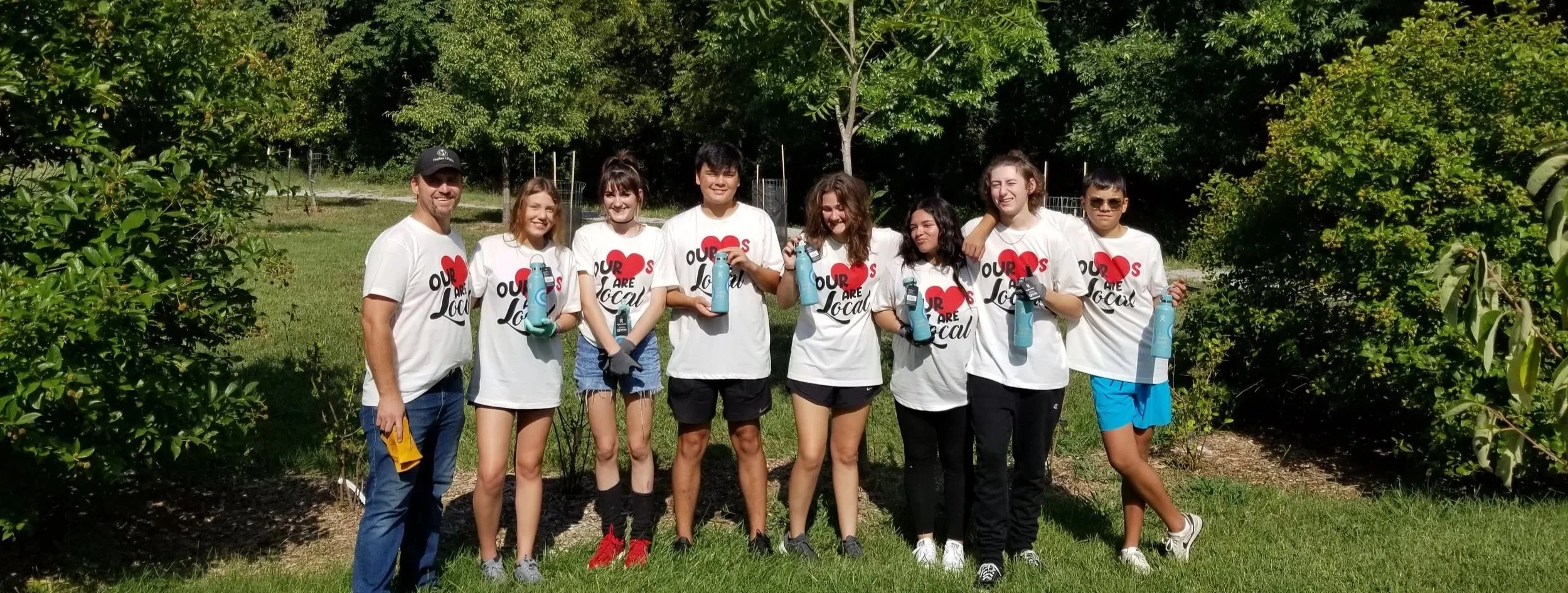
I’ve also come to greatly appreciate the Rosedale Development Association, which helps bring people to the space by co-organizing Green Team Work Days. These volunteer days gather neighbors to choose their own eco-adventure, whether that be trash cleanup, honeysuckle removal, or orchard tasks.
More Than a Source of Fresh Food
Over time, I’ve learned a lot about community engagement, and mainly, just how showing up and being regularly present makes a huge difference. The most common recruits tend to be playground parents, people shooting hoops, and trail walkers who stop by with curiosity. It brings me so much joy to watch the awe wash over their faces as I explain the various trees and that this is a free, open, community resource.
There are so many reasons why this little orchard is important to me and others. The Fisher Park Orchard serves the Rosedale neighborhood in the 66103 zip code and is home to approximately 5,961 households. Within our community, 32.7% of households with children receive SNAP benefits, and 18.4% of residents live below the poverty line. Our particular zip code lacks both a grocery store and a regular farmers’ market. This orchard, at full capacity, has the potential to produce more than 2,250 pounds of food annually. That is equivalent to about 6,800 servings of fruits, nuts, and berries each year. As a public perennial food space, the orchard allows anyone to freely harvest food without identification requirements, proof of income, or program enrollment. In addition to food access benefits, the orchard provides important environmental benefits. Using TreeKeeper urban forestry software, we can estimate that over 20 years, the existing trees can sequester more than 10,874 pounds of carbon, mitigate approximately 16,365 gallons of stormwater, and remove nearly 100 pounds of air pollutants.
I steward this orchard for so many reasons. In addition to these powerful stats, I do this for the kid planting their first tree knowing it could be around for 100+ years, for the teen who learned about grafting and asked 20 follow up questions in disbelief, for the people using the space for their evening call to prayer, for the guy with his dog who never knew what a pawpaw was and was surprised to learn that they are likely naturally tucked into the trees of very trail he walks weekly, and for Jim and his applesauce.
And, of course, for the Charlie Brown pecan tree. That raggedy pecan tree is now thriving!
Growing Orchard Participation
But, as with all things, engagement takes WORK! Someone could literally be around the corner and never know the orchard existed. Based on my observations and experiences from stewarding this orchard and through our national network of orchard programs, I put together some resources to help spark ideas:
I deeply love this work and what it brings to neighborhoods. It is an honor to be able to bring this concept to cities across the country and watch the spaces bloom into beautiful community connections and stories. An orchard is just a group of trees without people to love and care for them. In the end, strong community engagement feeds the reciprocity possible in a well-cared-for space.
About the author
Ashley Vernon serves as Co-Executive Director of The Giving Grove, guiding orchard program implementation across the country. By strengthening the national network through technical support, research, and data management, she strives to ensure each program, steward, and orchard site can achieve its greatest potential. Her work centers on collaboration, equity, and sustainability, so that all communities can share in the harvest.