
Community Orchard Signage: Creating Welcoming, Educational, and Community-Centered Orchard Spaces
Each month, we share expert-led training sessions to help community orchard stewards grow and care for thriving fruit trees. On this page, you’ll find a summary of key takeaways and additional resources to deepen your knowledge. Be sure to explore past workshops for even more insights into urban orcharding best practices!
Interested in attending a workshop? Sign up for our workshop series email list!
When people visit a community orchard for the first time, they often have the same questions:
Am I allowed to be here?
Can I pick the fruit?
Who takes care of this space?
What am I looking at?
Good signage answers those questions before they’re ever asked.
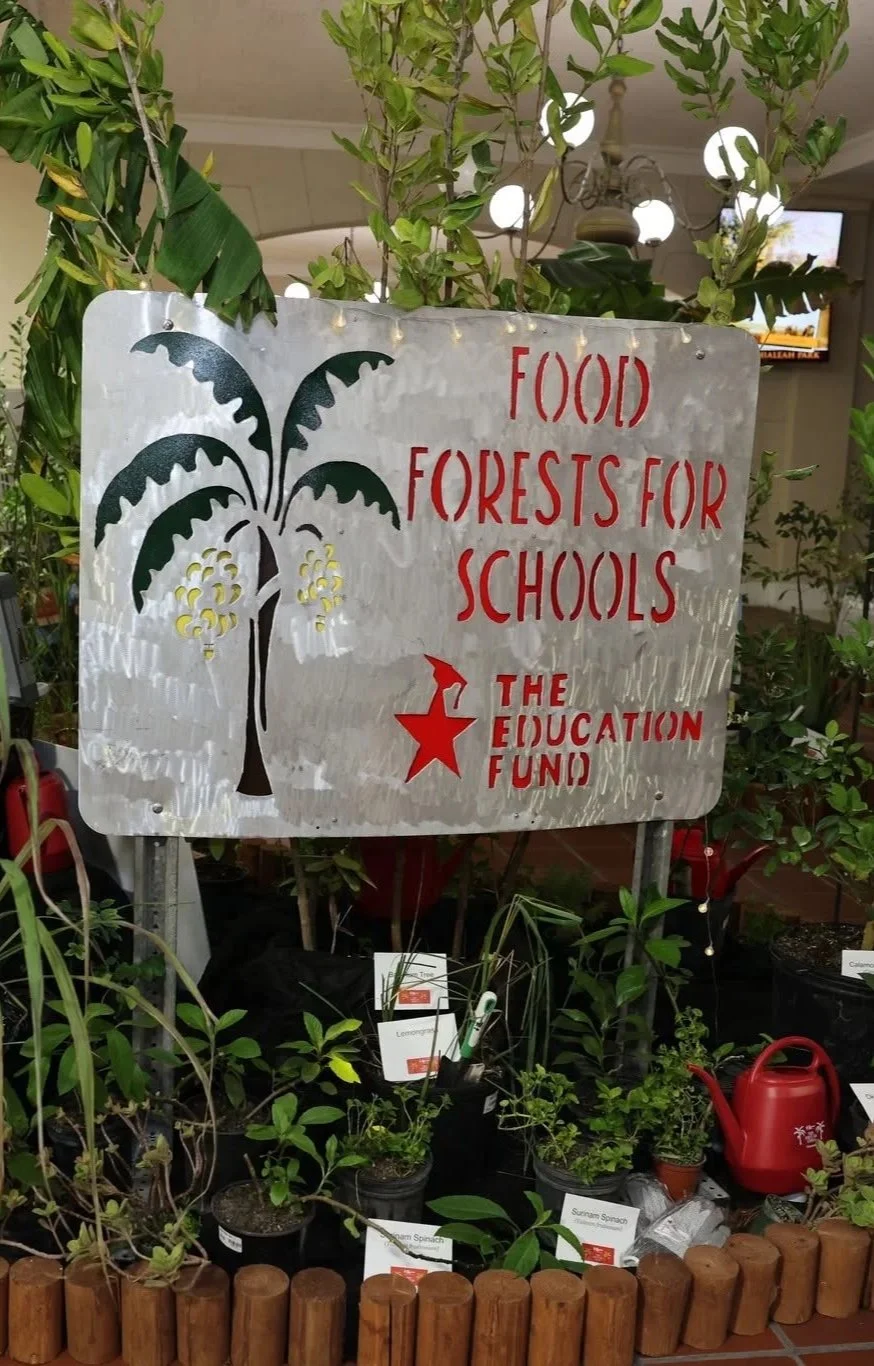
During a recent Giving Grove National Network webinar, orchard leaders from across the country shared how signage helps transform orchards from collections of fruit trees into welcoming community spaces. Featuring Debi La Belle of The Education Fund’s Food Forests for Schools program in Miami and Chris Smyth of Cincinnati’s Common Orchard Project, the conversation explored how signage can educate visitors, strengthen community ownership, support fundraising, and help orchards better serve their neighborhoods.
One theme emerged again and again: signage is often one of the most requested improvements in community orchards, yet one of the most overlooked.
Why Signage Matters
Through Giving Grove’s Stand Together pilot in Kansas City, visitors consistently shared that they wanted more information about the orchards they were encountering. Many visitors weren’t volunteers or orchard stewards. They were neighbors walking through the space, families exploring their community, or people discovering the orchard for the first time.
For those visitors, signage serves an important purpose. It communicates that the orchard is intentional, cared for, and open to the community.
Effective signage can:
Welcome visitors into the space
Clarify whether fruit is available for harvest
Explain orchard rules and expectations
Teach visitors about fruit trees and growing practices
Recognize partners, sponsors, and volunteers
Share the story and purpose of the orchard
Connect visitors to additional resources through QR codes
Most importantly, signage helps create a sense of belonging. A simple sign that says “You are welcome here” can be just as valuable as a detailed educational display.
A Common Challenge Across Orchard Programs
During the webinar, participants from orchard programs across the country shared a similar reality: many community orchards have little or no signage.
Where signage does exist, it is often limited to entrance signs, tree identification markers, donor recognition plaques, or QR codes. At the same time, orchard leaders identified several opportunities for improvement, including:
Multilingual signage
Clear harvest guidance
Educational interpretation
Visitor orientation
Community storytelling
Donor engagement
One participant noted that a simple sign with a QR code and donation option generates approximately $200 each year from passersby, demonstrating how even modest signage can create meaningful support for orchard programs.
Signage as Education and Storytelling
For Debi La Belle and The Education Fund’s Food Forests for Schools program, signage has become an essential educational tool.
Over more than a decade of developing food forests across Miami-Dade County schools, the program has created a layered approach to signage that serves students, teachers, families, administrators, and community members alike.
The program began with entry signs that clearly identified each food forest. From there, it expanded into interpretive signage that helps visitors understand both the purpose of the space and the systems within it. Educational signs explain concepts such as food forests and banana circle composting systems in language accessible to young learners while reflecting the plants and features visitors encounter on site.
More recently, the program developed resiliency-focused signs that encourage mindfulness, stewardship, observation, and problem-solving. These signs help reinforce that food forests are more than gardens. They are outdoor classrooms, gathering spaces, and places where young people can build relationships with nature and one another.
The lesson is clear: signage can do more than provide information. It can shape how a community understands and values a space.
Practical and Affordable Signage Solutions
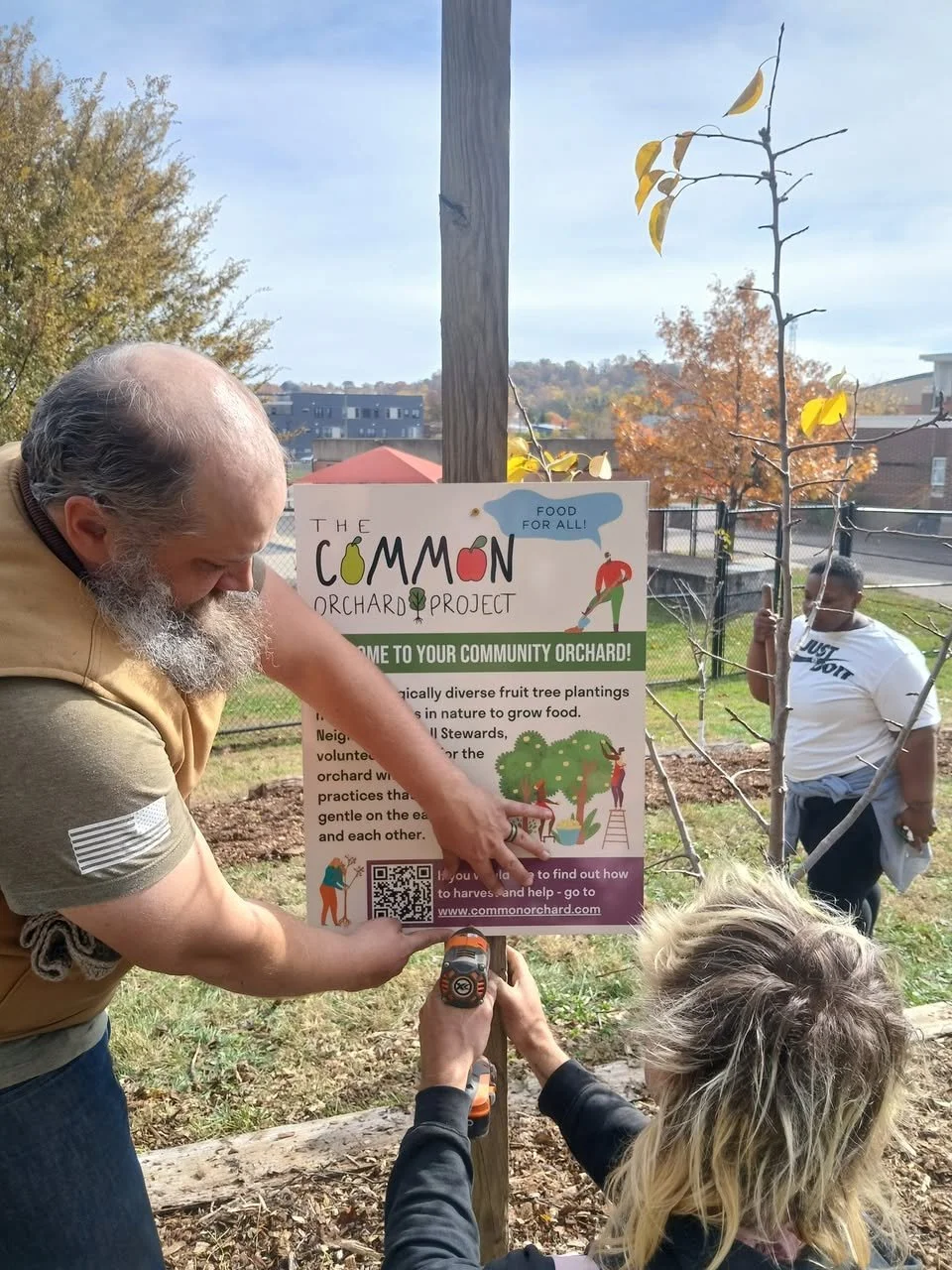
Chris Smyth of the Common Orchard Project shared a practical perspective shaped by managing more than 40 community orchards throughout Cincinnati.
His advice was simple: don’t let perfection prevent progress.
Rather than waiting for a large signage budget, the Common Orchard Project has found creative ways to produce durable, attractive signs at a reasonable cost. These include:
Routed wood entrance signs created through local maker spaces
Aluminum composite signs produced by neighborhood sign shops
Tree identification tags paired with QR codes
Durable metal plant labels
Temporary harvest signs made with paint pens and weather-resistant materials
Some of the most effective signs are also the simplest. A hand-lettered sign that tells visitors fruit is ready to harvest may have a greater impact than a professionally designed sign that no one reads.
Chris also encouraged orchard programs to look locally for support. Community artists, maker spaces, vocational programs, sign shops, and volunteers can often provide expertise and production assistance at a fraction of the cost of traditional design firms.
What Makes Signage Effective?
While every orchard is different, webinar participants identified several common characteristics of successful signage.
Effective signs are:
Clear and easy to understand
Designed for the audience using the space
Welcoming and inclusive
Durable enough for outdoor conditions
Consistent with the orchard’s identity
Easy to replicate and update
Most importantly, effective signage answers real visitor questions. For many orchards, the first step isn’t creating a comprehensive signage system. It’s identifying the one thing every visitor should know and making that message visible.
That message might be:
You are welcome here.
This fruit is free to pick.
Please wait until fruit is ripe.
This orchard is cared for by the community.
Learn more by scanning this QR code.
These simple messages help transform orchards into spaces where people feel informed, connected, and invited to participate.
Additional Resources
Have examples of signage that have worked well in your orchard? We’d love to hear from you. Reach out to the Giving Grove National Network team and help us continue building a library of ideas and resources for community orchards across the country.