
Growing Second Chances: Ms. Wanda’s Orchard of Opportunity
This is the story of a garden that grows far more than food. In the heart of South Dallas, Ms. Wanda and the Cornerstone Community Garden are cultivating second chances, nurturing community, and transforming a once-vacant lot into a place of belonging. What follows is a portrait of an orchard—and a leader—proving that with enough care, people can flourish just as beautifully as the plants they tend.
Want to learn more about The Giving Grove straight from your inbox? Consider subscribing to our quarterly newsletter!
Contributed by Sarah Sikich, Director of Marketing & Communications
At Cornerstone Community Garden in South Dallas, growth is measured in more than just inches of stem or pounds of fruit.
It’s measured in warm hugs and second chances.
In laughter ringing through rows of collards and okra.
In a smile so radiant it makes even a sweltering garden feel like home.
At the heart of it all is Ms. Wanda, orchard steward, volunteer coordinator, and unofficial greeter of all who wander into this community-rooted haven. With a big embrace and an even bigger laugh, she welcomes neighbors, students, volunteers, and visitors alike.
“Come on in,” she calls out. “Let me show you what we’ve got growing.”
And what’s growing here is more than plants—it’s people.
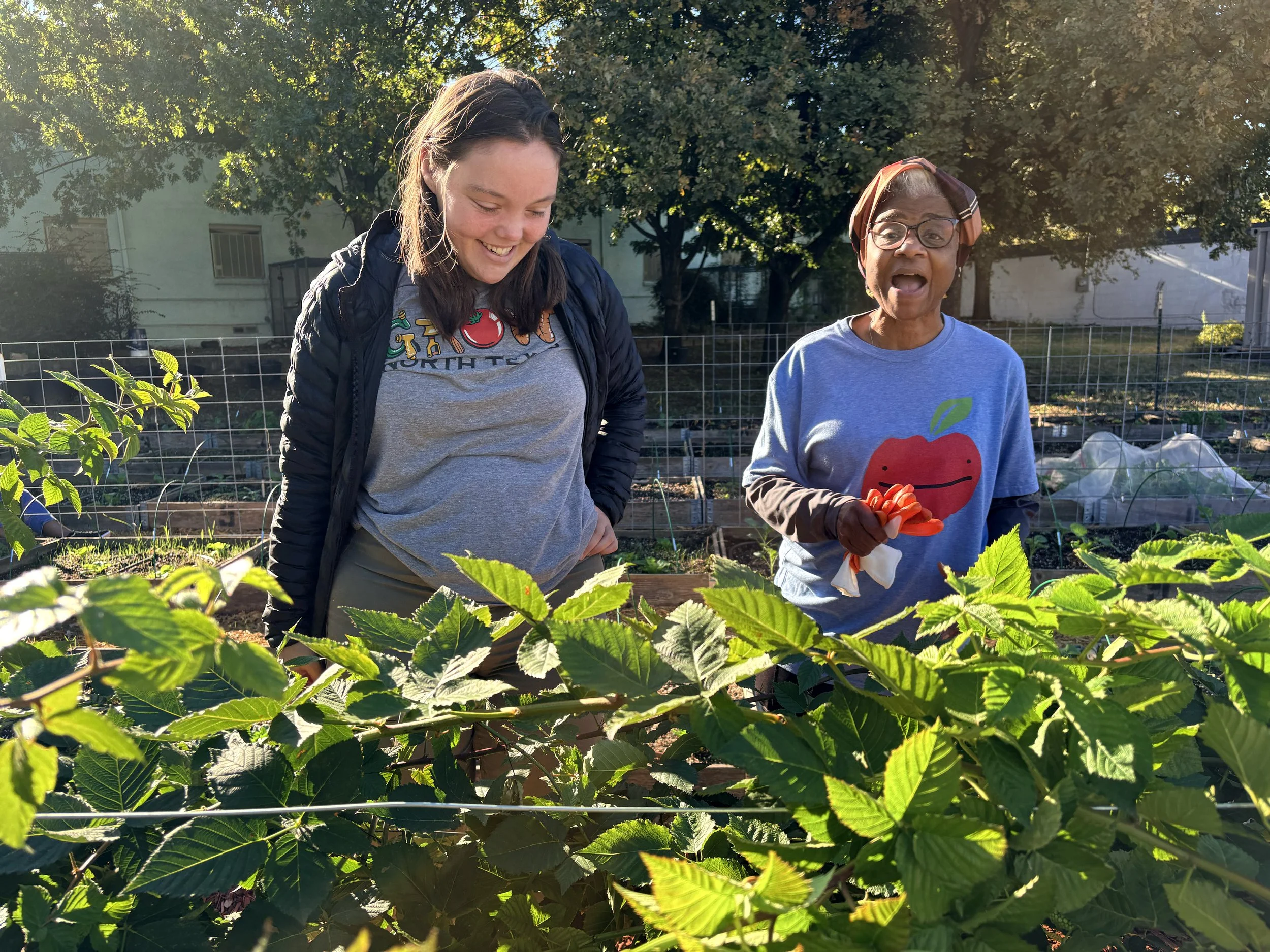
Program Manager, Ilyse Putz, and Orchard Steward, Wanda, share a laugh next to blackberry bushes.
A Block Transformed
Cornerstone Community Garden is part of something much larger: a church-led network of support services that spans nearly an entire city block. There’s a community kitchen that feeds unhoused neighbors, an afterschool program, an instructional kitchen, a community laundromat, and even a nonprofit supermarket. Together, they form a safety net in a neighborhood facing persistent food insecurity and high rates of homelessness.
And right in the middle of it all: the orchard.
“It was just a vacant lot,” Wanda says. “But Pastor Chris remembered it used to be a garden decades ago. So, he said, ‘Why don’t we bring it back?’”
With donated raised beds and a hefty haul of compost, they did just that. Then came the fruit trees—apples, pomegranates, and blackberries—planted with the help of The Giving Grove program at Grow North Texas, managed by Ilyse Putz.
Now, 50+ raised beds brim with kale, spinach, garlic, and peppers. The orchard is taking root. And the harvest? It’s already feeding the community, both literally and emotionally.
“Some of the folks out here are coming out of incarceration,” she says. “Some are unhoused. But they show up, they dig in, and they help this place bloom.”
Working the Land, Rebuilding a Life
For Wanda, the garden is more than rows of produce. It’s a place where people can plant themselves and grow.
“Some of the folks out here are coming out of incarceration,” she says. “Some are unhoused. But they show up, they dig in, and they help this place bloom.”
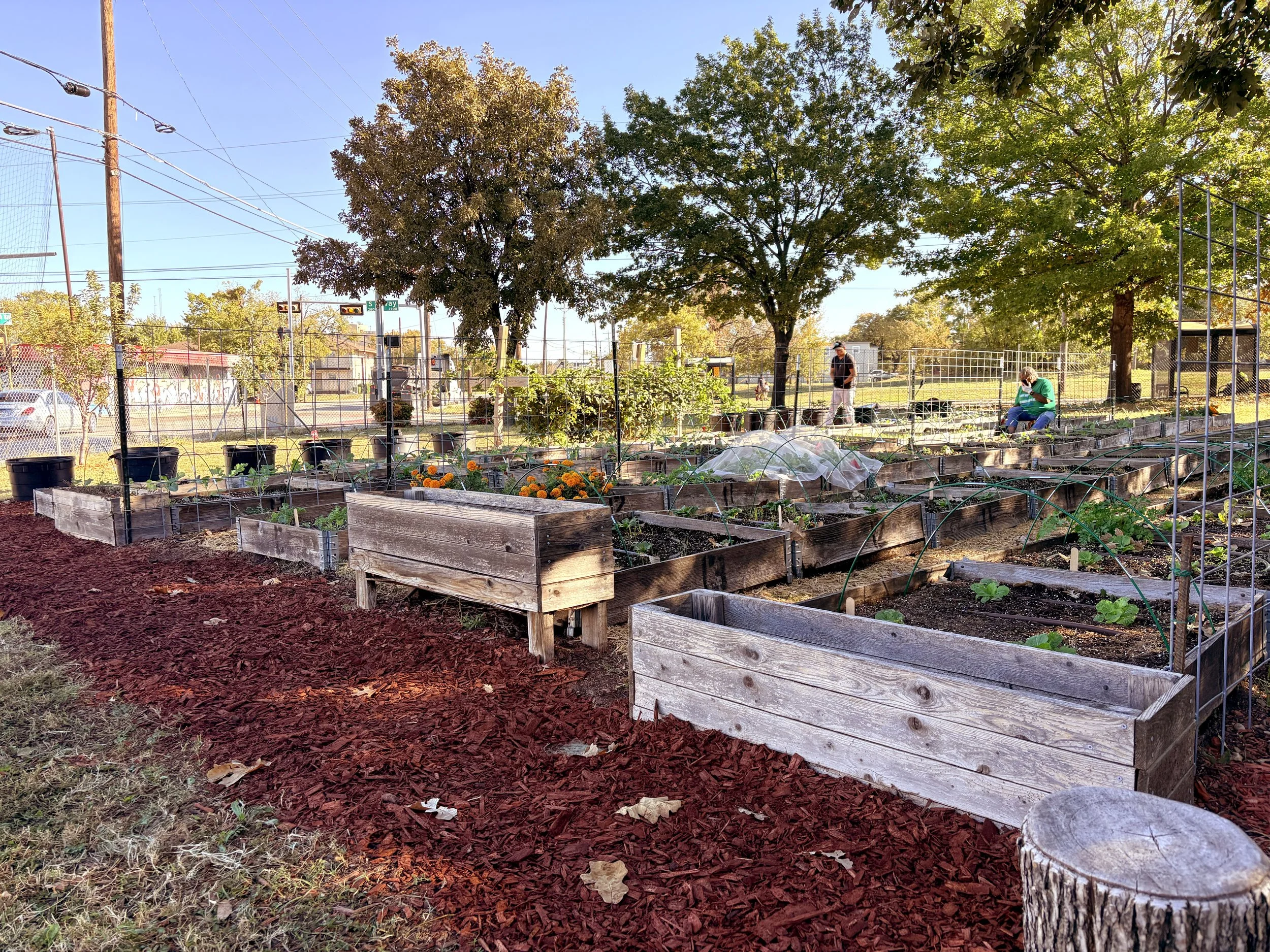
Volunteers tend to raised garden beds in south Dallas.
With care and intention, Wanda and her team identify individuals who might benefit from meaningful, hands-on work. Volunteers like Stephen and Valentine, who were recently released and are still without permanent housing, have become steady hands in the soil, learning alongside Wanda and helping others do the same.
“We look for those who are ready,” she says. “Ready to start again. Ready to work. And ready to feel proud of what they’re a part of.”
There’s no pretense in Wanda’s leadership. Just love, laughter, and purpose.
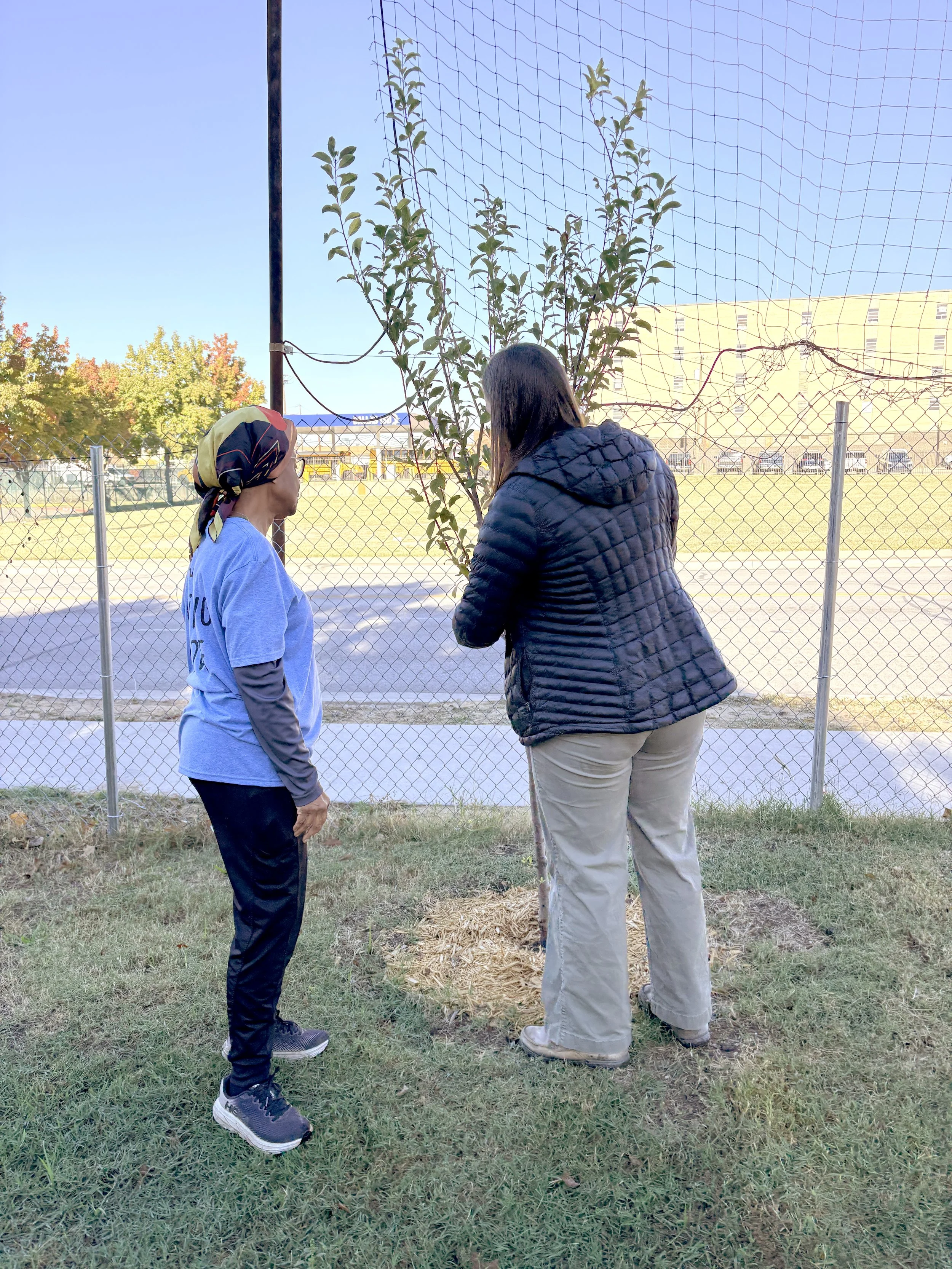
A Giving Grove program manager trains the volunteer orchard steward on limb training.
From Blackberry Jam to Tomato Dreams
Though the orchard’s trees are still young, the garden beds are already delivering abundance. The blackberry brambles alone produced more than 25 one-gallon bags this year. So many, in fact, that they inspired a whole new line of preserves.
“We’re turning them into jam,” Wanda grins. “Selling it in the market to help pay for seeds and supplies.”
That jam isn’t the only thing cooking. Cornerstone hosts canning workshops, cooking demos, and lifestyle classes to help neighbors eat healthier, learn new skills, and enjoy the harvest. This season? Tomato jam and peach-basil preserves are on deck, crafted by a creative local preserver who loves to experiment.
Even the corner grocery store next door sells produce from the garden at affordable prices, especially for SNAP recipients, who can purchase items at a 50% discount thanks to a grant from the American Heart Association.
A Garden of Belonging
Though she didn’t grow up farming, Wanda’s green thumb seems to have been inherited. “My grandmother always had a garden,” she recalls. “We’d run around in it as kids. I guess something stuck.”
That something now fills rows of black-eyed peas, basil, collards, and garlic. It fills the air with the scent of mint and soil. And most of all, it fills a gap, creating a place of dignity and inclusion in a community that has too often been overlooked.
Kids from the after-school program come to tend the raised beds. Seniors stop by to chat. Monarch butterflies drift across the marigolds Wanda planted just because she loves flowers. And when someone new arrives, Wanda is there with a hug, a tour, and maybe a bag of produce to take home.
“We’re not just growing vegetables,” she says, smiling. “We’re growing people.”
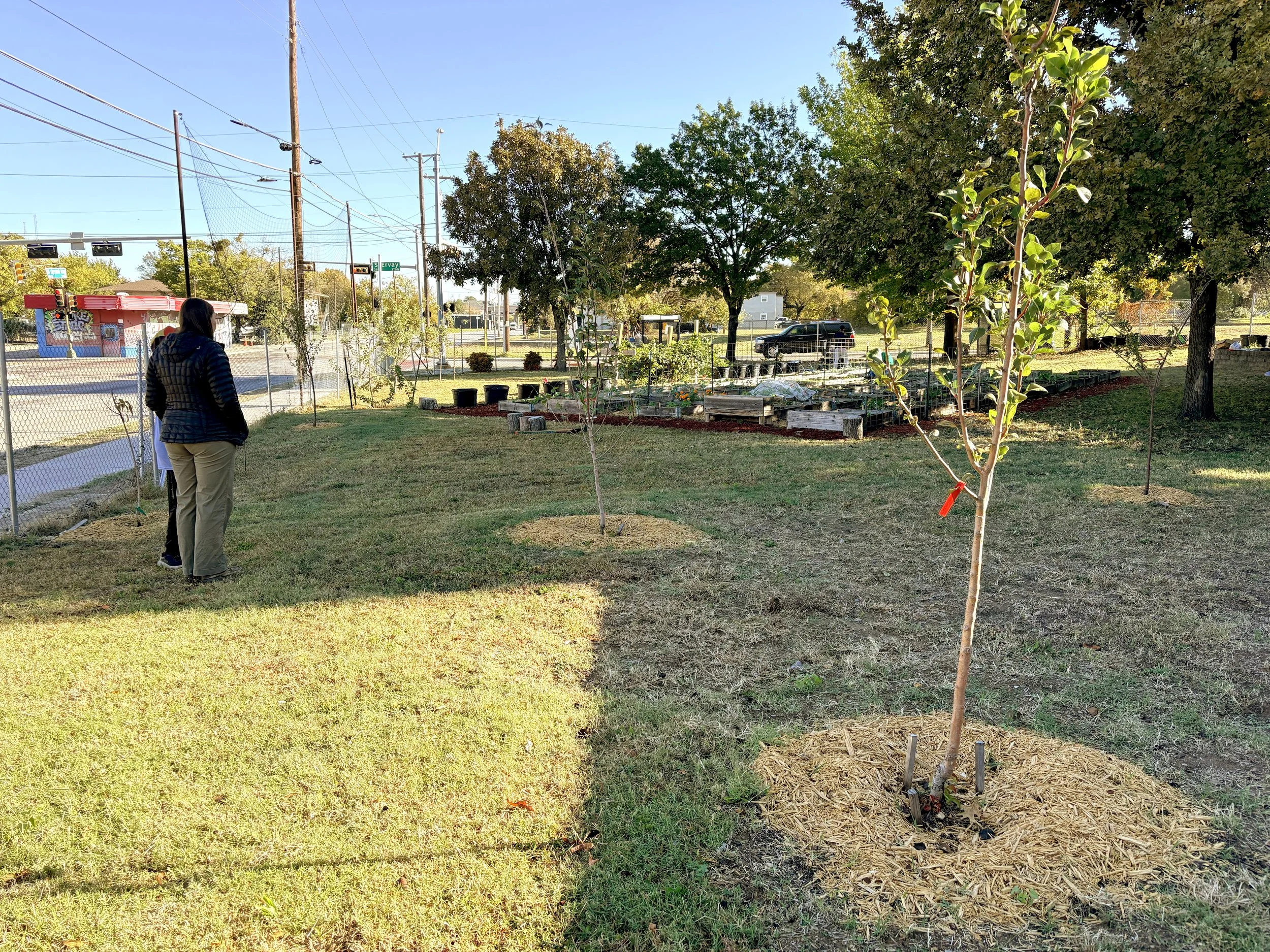
Ilyse and Ms. Wanda look upon the Cornerstone Community Garden.
More Than a Garden
Cornerstone isn’t just growing food—it’s growing possibility.
It's where people pick up a trowel and rediscover their purpose.
It’s where formerly incarcerated individuals find welcome instead of judgment.
It’s where kids dig their hands in the dirt and learn to nurture something from seed to fruit.
And it's where Ms. Wanda, with her infectious joy and fierce compassion, reminds us all that the right conditions can transform a forgotten plot into a place of healing, dignity, and new beginnings.
“We’re not just growing vegetables,” she says, smiling. “We’re growing people.”
About the author:
Sarah Sikich is Director of Marketing & Communications at The Giving Grove, where she leads storytelling, brand strategy, and national campaigns that amplify the power of community orchards. A longtime advocate for urban horticulture, she blends creativity and data-driven strategy to inspire action and celebrate the growing Giving Grove network.