
West Dallas Multipurpose Center with Ashley Hutto
At the West Dallas Multipurpose Center, a once-forgotten patch of land has quietly transformed into a thriving neighborhood orchard—thanks to the vision and perseverance of Center Manager Ashley Hutto. On this Grow North Texas storytelling trip, contributor Sarah Sikich explores how a few fruit trees sparked curiosity, restored ecological life, and reshaped a community’s relationship with its own soil.
Want to learn more about The Giving Grove straight from your inbox? Consider subscribing to our quarterly newsletter!
Contributed by Sarah Sikich, Director of Marketing & Communications
From Brownfields to Blackberries: An Orchard Story in West Dallas
When Ashley Hutto arrived at the West Dallas Multipurpose Center six years ago as the Center Manager, the garden out back was more Bermuda grass than bounty. Originally built for a senior program that had little interest in planting or harvesting, the space was languishing—much like the community’s trust in what could grow from the soil around them.
“It had been gifted to the seniors,” Ashley recalls, “but no one wanted to water it, and no one wanted to weed it. They just wanted the tomatoes to show up at their door.” So, she pivoted. Instead of relying on volunteers who weren’t there, Ashley slowly began reimagining the space. A few garden beds here. A fruit tree or two there. And then came the Asian pears.
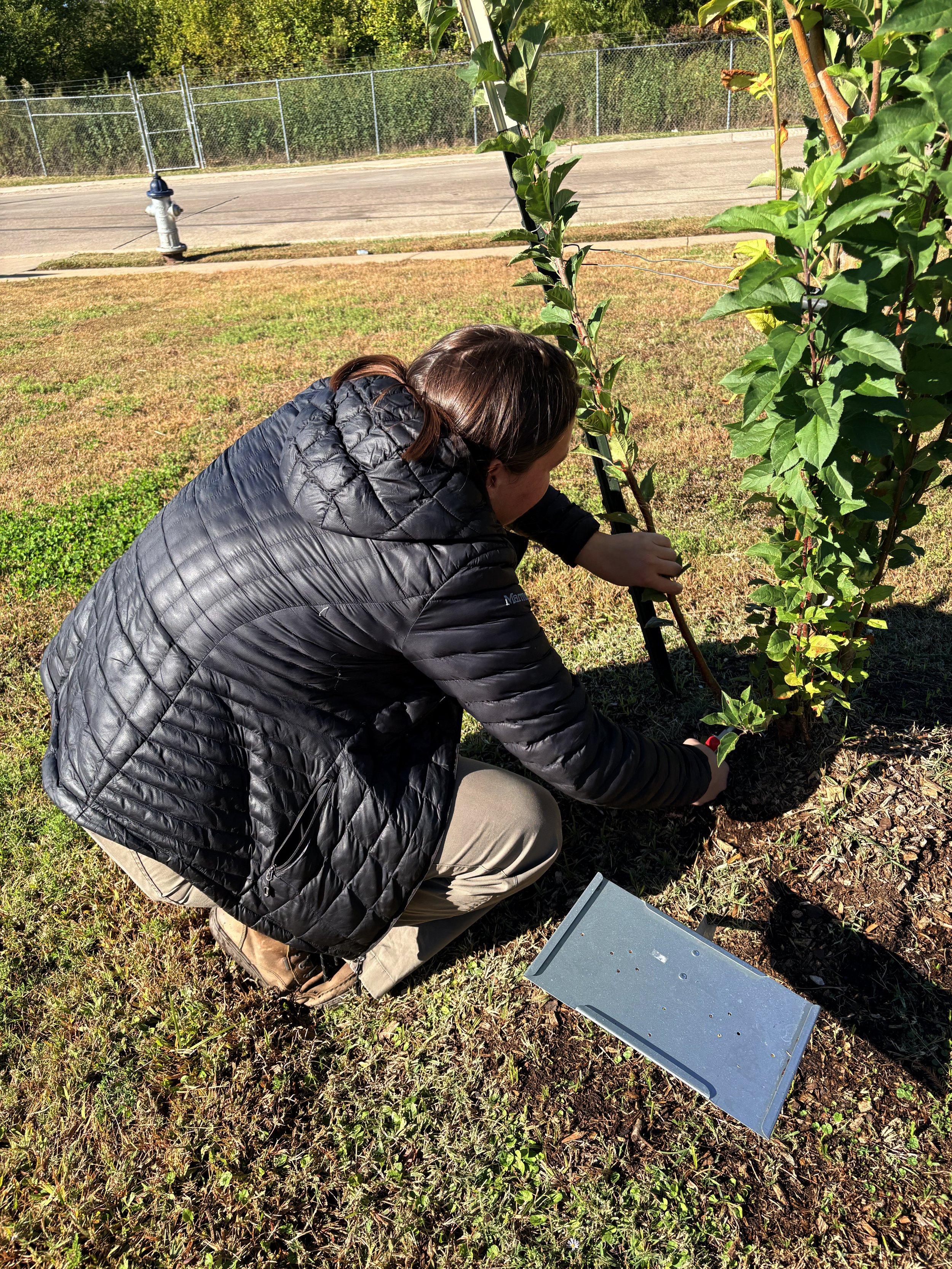
“People watched that tree grow for two years. And when the fruit came, they were curious. They wanted to taste what they had seen grow”
At first, it wasn’t clear if anyone noticed. But one day, someone did. A groundskeeper asked if he could try one of the strange golden fruits. Then it was the sanitation truck driver. Then, neighbors walking by on the sidewalk. Then a child picking blackberries and proudly carrying them inside to share.
“It was a discovery,” Ashley says. “People watched that tree grow for two years. And when the fruit came, they were curious. They wanted to taste what they had seen grow.”
That’s how the orchard began.
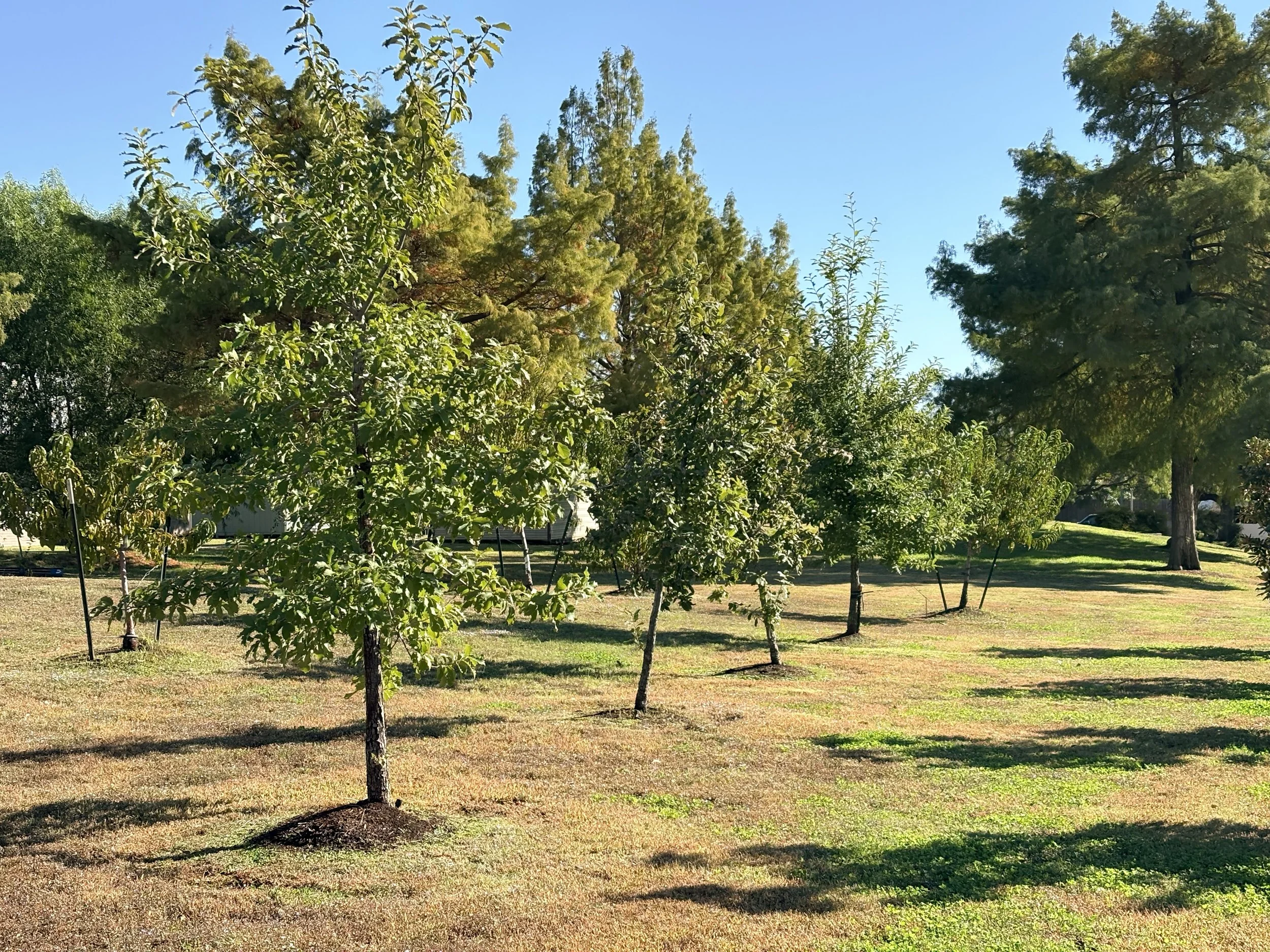
A Place to Grow—Literally and Symbolically
The land that the orchard now rests on holds a long history of environmental harm. Just blocks away is one of the largest EPA Superfund cleanup sites in the country, a remediated lead smelter that once blanketed the neighborhood in particulates. Add in industrial zoning, a nearby shingle plant, cement batch sites, and the oppressive heat of an urban heat island, and you have a perfect storm of ecological injustice.
“Now we have birds nesting in the trees, rabbits hopping through the brambles, and even a few baby bunnies last year.”
Ashley wanted to change the narrative. “I wanted to demonstrate that the soil here could heal,” she says. “That even in a place like this—especially in a place like this—life could take root.”
The fruit trees planted with support from The Giving Grove program at Grow North Texas have done more than bear pears and apples. They’ve brought birds, bees, and squirrels back to a site that once had none. “When I first got here, we had mosquitoes and not much else,” Ashley laughs. “Now we have birds nesting in the trees, rabbits hopping through the brambles, and even a few baby bunnies last year.”
The orchard isn’t just feeding people. It’s feeding the ecosystem.
Reimagining Access, One Fruit at a Time
This is not your typical urban farm with rows of crops and a produce stand. There are no gates. No harvest events or “memberships.” Just trees, brambles, and the occasional volunteer tending to them.
And that’s entirely by design.
“If someone needs something, they come get it,” Ashley says. “It’s not about having the perfect harvest schedule. It’s about access. It’s about dignity.”
There’s something radical in that simplicity. Neighbors pick a few peppers or berries and go on their way. People visiting the center, whether for housing support, SNAP enrollment, or job services, wander over to the trees to see what’s ripe. And slowly, almost quietly, awareness spreads.
“A lot of people didn’t even know what the fruit was,” Ashley shares. “But they saw it growing. And when it ripened, they were willing to try it. That’s how curiosity grows.”
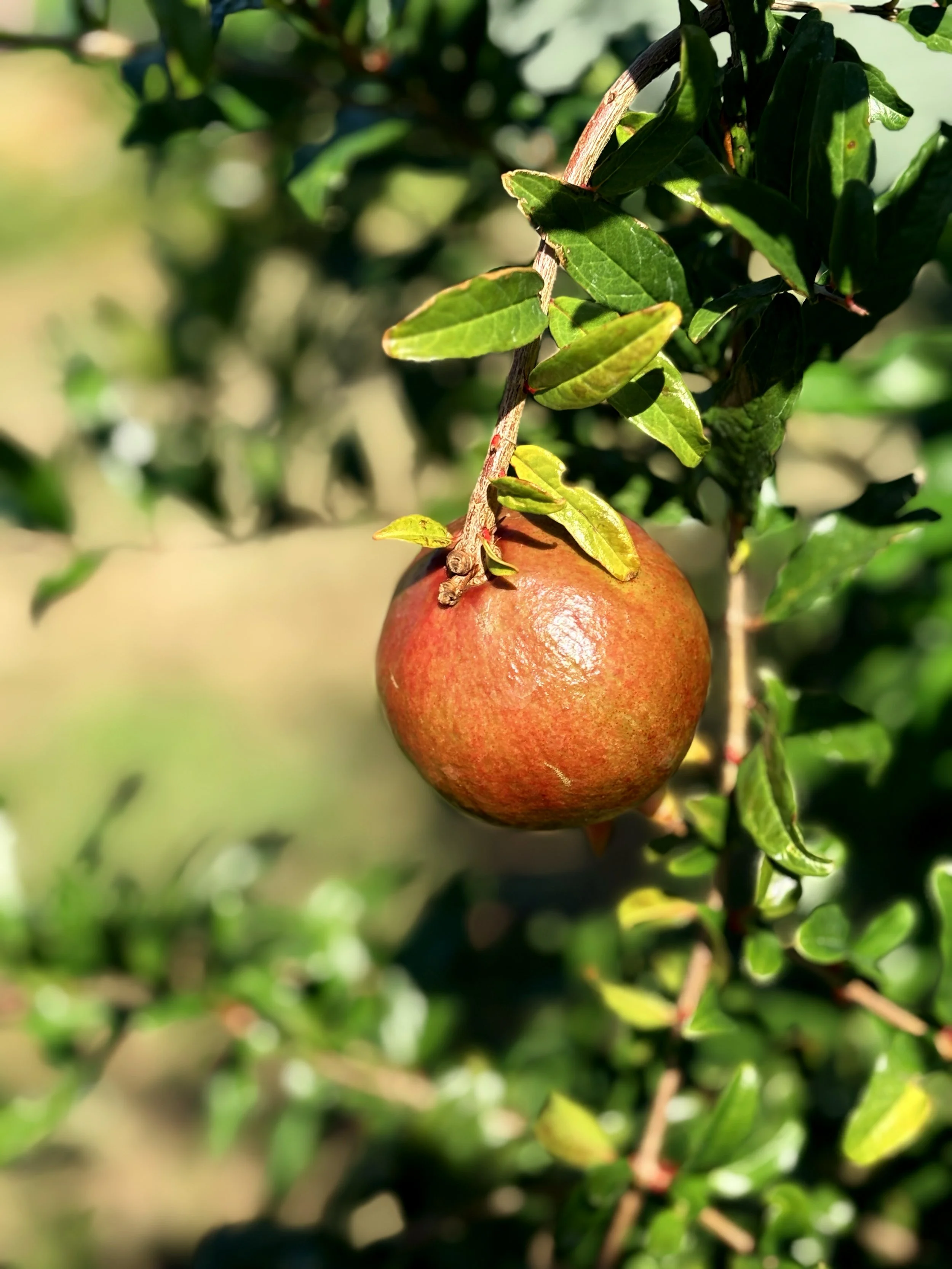
“Fruit trees are forgiving,” she says. “They don’t need you to show up every day. They’re patient.”
A Space That Sustains, Without Burnout
Ashley is candid about the challenges of community garden projects. “I tried the big volunteer days. I tried the school partnerships. But so many of these things rely on one person, and when that person moves on, it all falls apart.”
That’s why the orchard is so meaningful. It’s low-maintenance, perennial, and able to keep giving even without constant oversight. “Fruit trees are forgiving,” she says. “They don’t need you to show up every day. They’re patient.”
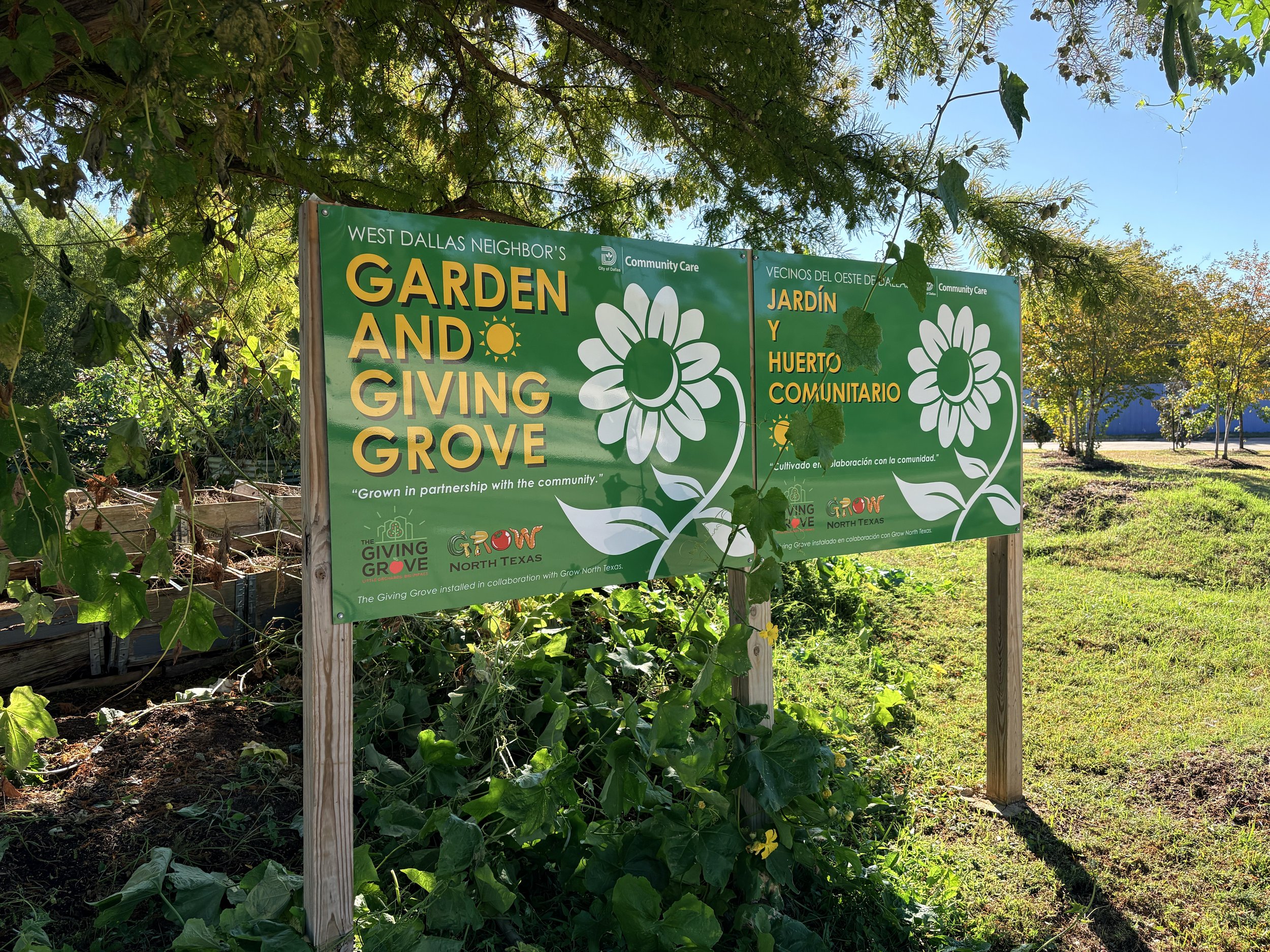
A Future That Feeds
As climate change intensifies and food insecurity continues to climb in Dallas, the West Dallas orchard offers a glimpse of what a more resilient, more just city could look like. It’s not a flashy solution, but it is a rooted one.
There are no harvest festivals here (yet). No big events or fanfare. But there are children who now know what an Asian pear tastes like. There are neighbors who’ve swapped curiosity for confidence when they reach for a fig or a blackberry. Wasps and bees are doing the work of pollination, and birds are returning to nest in branches that weren’t there six years ago.
And there’s Ashley, still tending quietly, letting the orchard grow beyond her.
“I don’t want to force an infrastructure on it that can’t sustain without me,” she says. “I want it to have its own life. And it’s starting to.”
About the author:
Sarah Sikich is Director of Marketing & Communications at The Giving Grove, where she leads storytelling, brand strategy, and national campaigns that amplify the power of community orchards. A longtime advocate for urban horticulture, she blends creativity and data-driven strategy to inspire action and celebrate the growing Giving Grove network.