
Healing the Soul and the Soil: A Memorial Orchard Grows in Garland
In Garland, Texas, a small orchard behind a neighborhood church is becoming something far more powerful than a place that grows fruit. It’s a space where memory takes root, where healing happens in the shade of young trees, and where a community is quietly transforming land once marked by loss into a sanctuary of life, hope, and connection.
Want to learn more about The Giving Grove straight from your inbox? Consider subscribing to our quarterly newsletter!
Contributed by Sarah Sikich, Director of Marketing & Communications
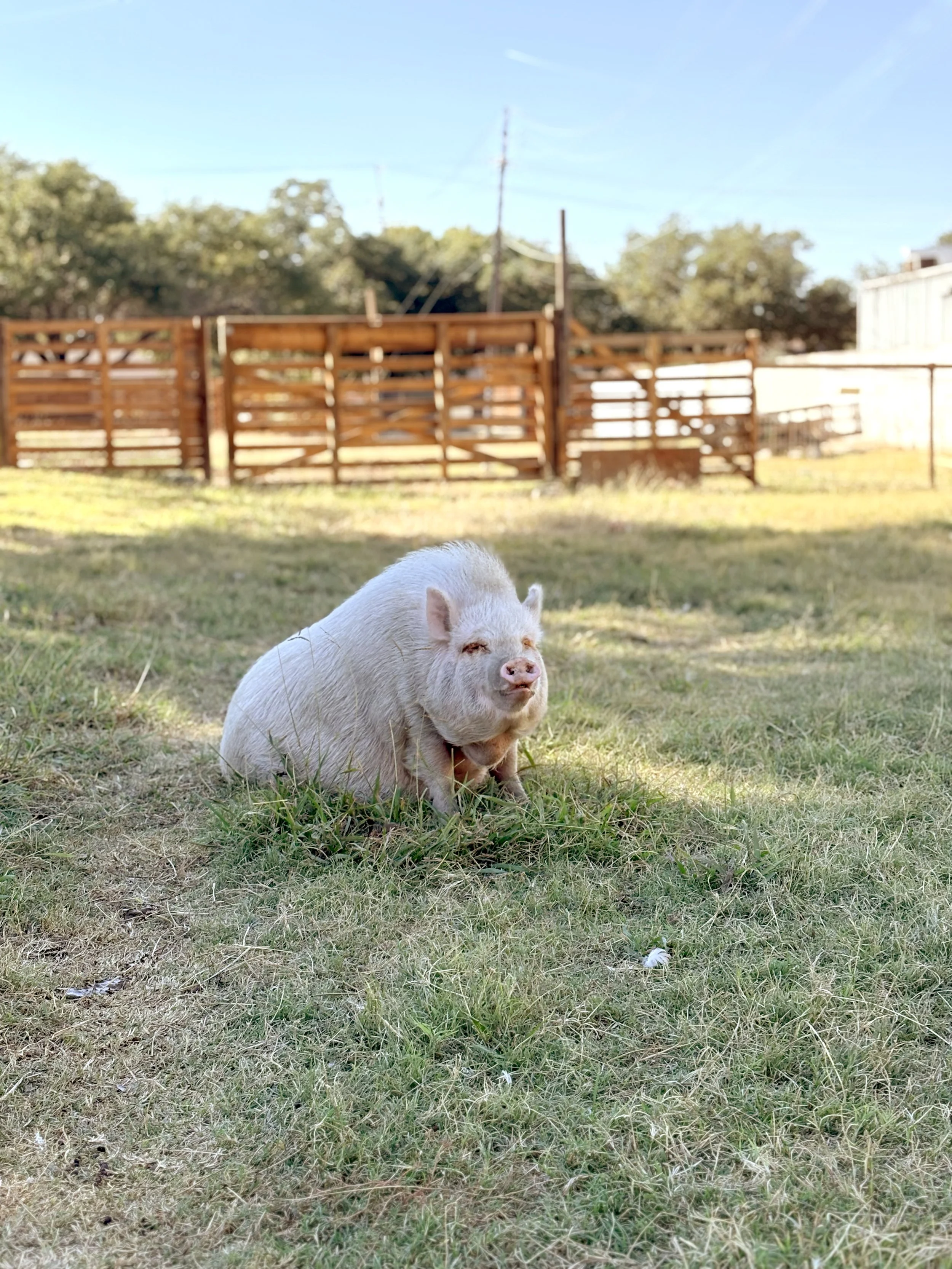
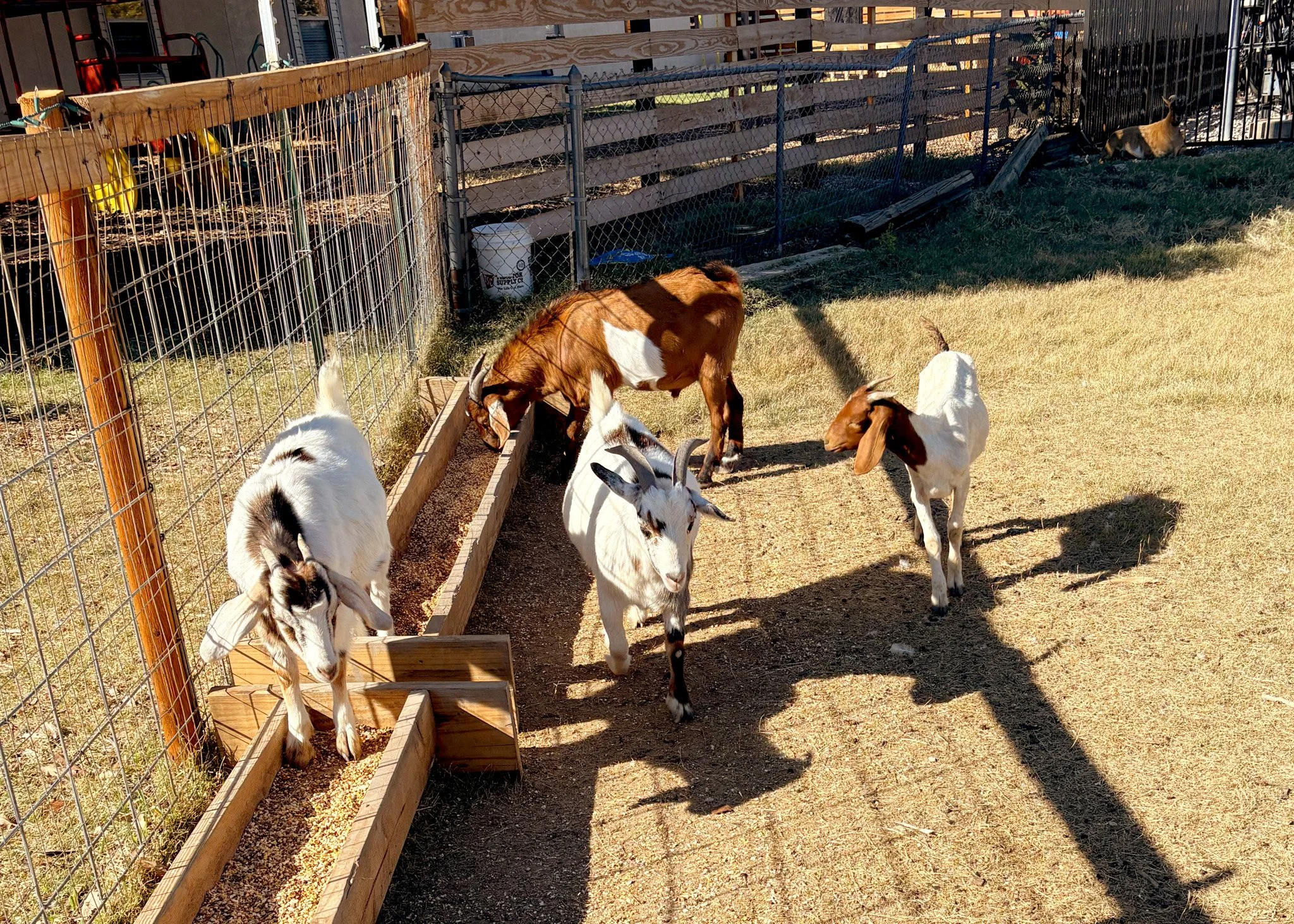
In a quiet corner of Garland, Texas, just beyond the reach of city traffic and tucked behind a modest church, a different kind of sanctuary is taking shape. It hums with life: goats bleat from their pen, chickens scratch in the dirt, geese and ducks honk in chorus, and a dog named Leroy offers a wagging welcome to anyone who visits. But the real heartbeat of this place lies in its orchard.
Here, fruit trees aren’t just food producers. They’re markers of memory.
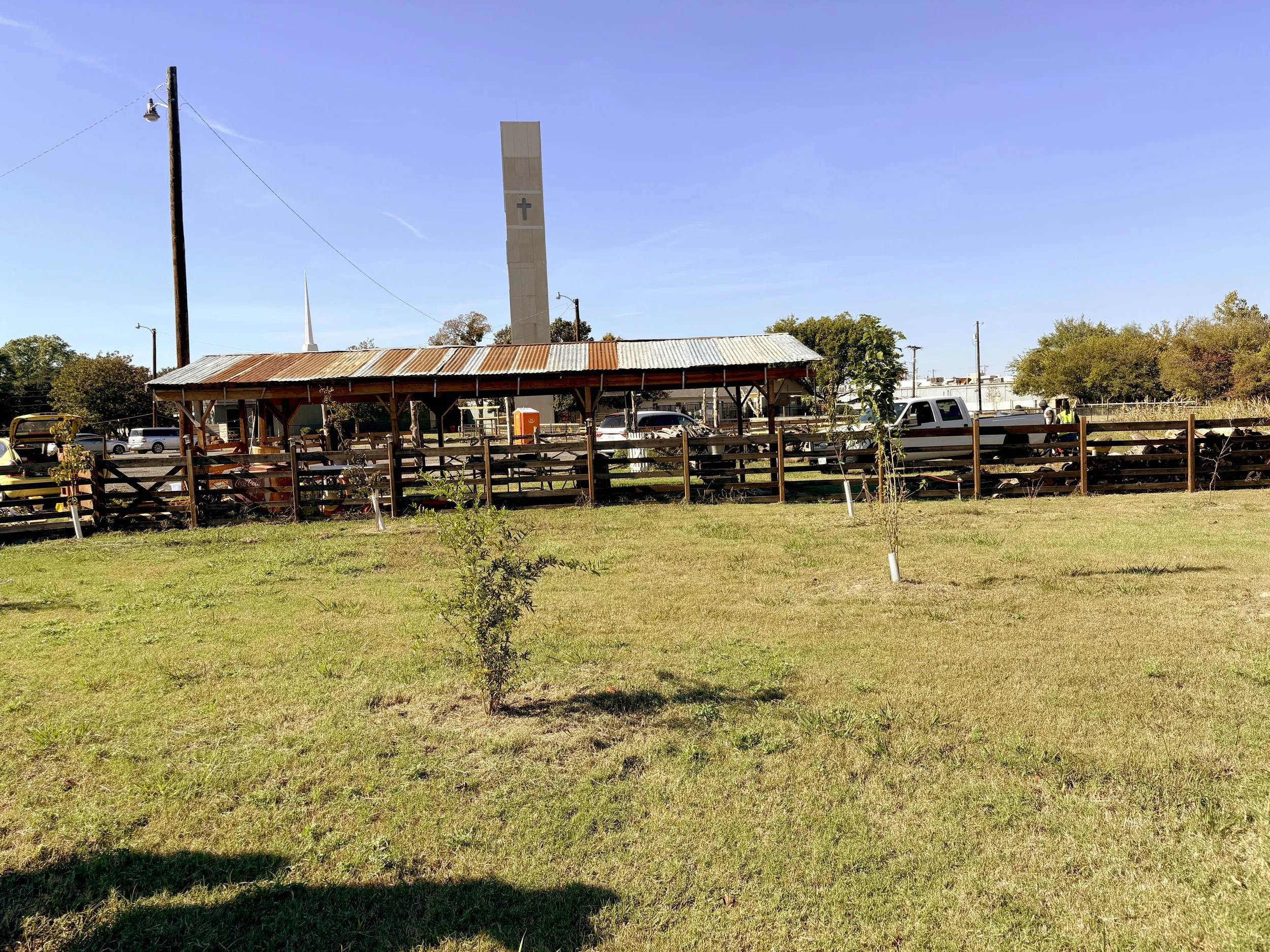
Each tree planted in the City Church Northside community orchard is, or will be, a living tribute, many dedicated to those lost too soon. For orchard steward Don Phillips, the mission is both deeply personal and quietly revolutionary.
“This is a memorial garden,” Don says. “My wife and I lost our daughter, Amanda, six months ago. We wanted to create something that would not only honor her life but give back to the community in a way that brings comfort and healing.”
Some trees already bear the names of others in the neighborhood. A neighboring couple has already dedicated a tree to their daughter, whom they lost. Others will be named soon. A sign at the orchard’s entrance is being designed to list the trees and the people they represent. A Tree of Life that turns remembrance into fruit.
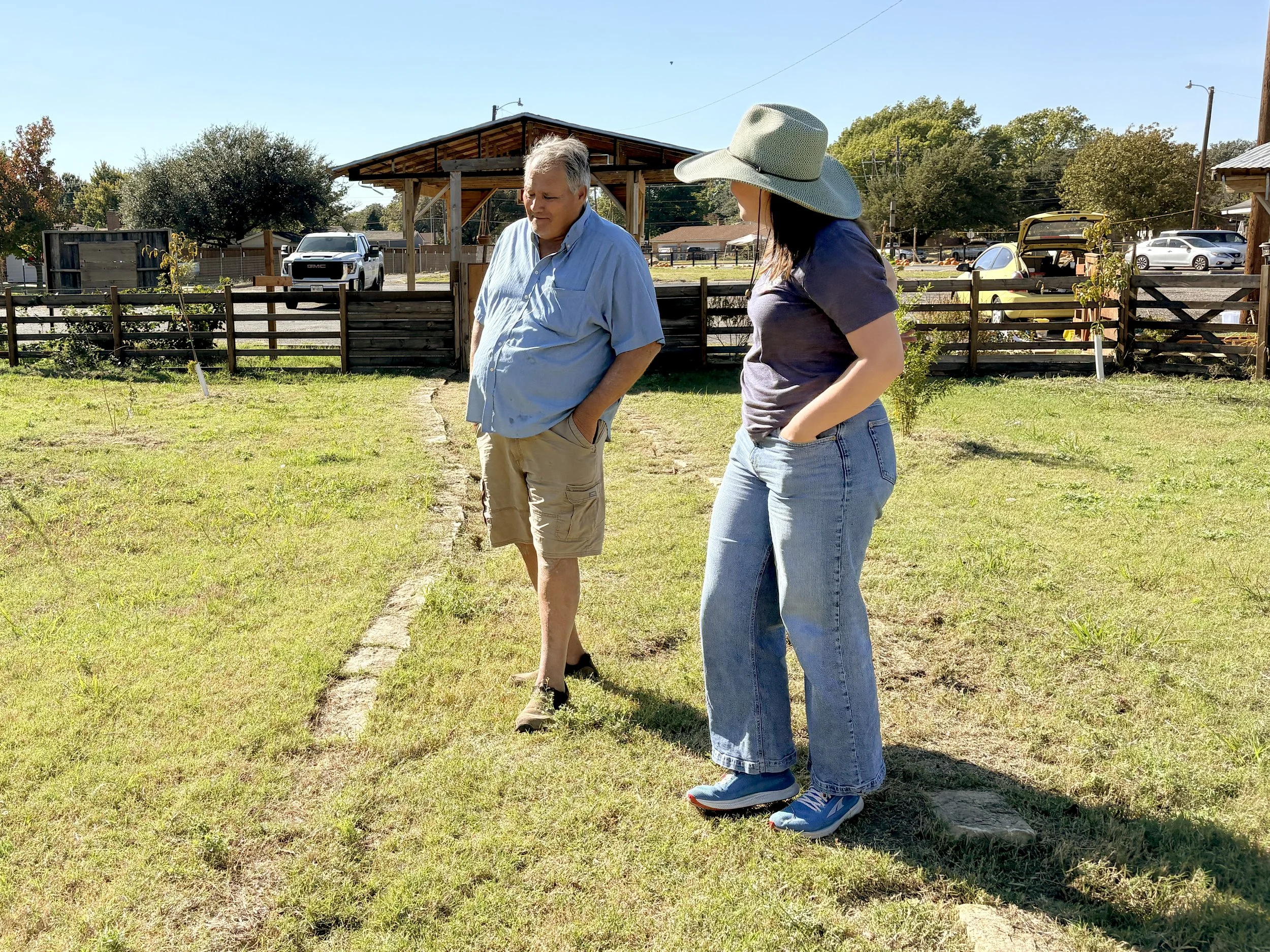
Ilyse Putz, Program Manager, and Don, Orchard Steward discuss the growing season.
Land with a Long Memory
Garland carries its own kind of loss, a legacy of environmental harm that shaped this land long before the first sapling was ever planted.
“This area was heavily industrial during World War II,” Don explains. “They built airplanes and bombs just up the road. Later, they even constructed nuclear warheads. A lot of that waste is still here.”
Don has seen the consequences up close. Years ago, he helped investigate toxic sites across the city. In one case, soil samples from a local elementary school—just blocks away—revealed lead levels over 61,000 parts per million. For context, anything above 100 ppm is considered dangerous for children.
The soil around the church tested cleaner, but still showed signs of long-standing contamination: arsenic, chromium, municipal lead. “It was low enough to not raise flags,” Don says. “But it’s there. The land remembers.”
That’s part of what makes this orchard so powerful. It’s not just growing fruit- it’s growing proof that healing is possible.
“It’s not just a garden. It’s a place to rest. To breathe.”
A Sanctuary in Motion
From the start, the orchard was built with community in mind. And it’s not just fruit trees that bring people through the gate. This space is teeming with life: okra and corn in the summer, eggs from the hens, plans for pollinator hives, and even dreams of honey production from a wild hive tucked in the trunk of an old tree.
And then there are the animals.
“We’ve had families come out and spend three hours just sitting in the goat pen,” Don says. “Kids petting pigs. Parents watching their children play. It’s not just a garden. It’s a place to rest. To breathe.”
Whether it’s through community bonfires, farmers market gatherings, or quiet moments under the shade of a memorial tree, the orchard offers a kind of peace that’s hard to quantify, but easy to feel.
Restoring Resilience
For all its beauty, the orchard is also a study in perseverance. The land didn’t come ready-made. Don and his team faced challenges that would have turned most people away: no irrigation, scorching droughts, heat-damaged trees, stolen brambles, and tangled garden hoses chewed up by overzealous mowers.
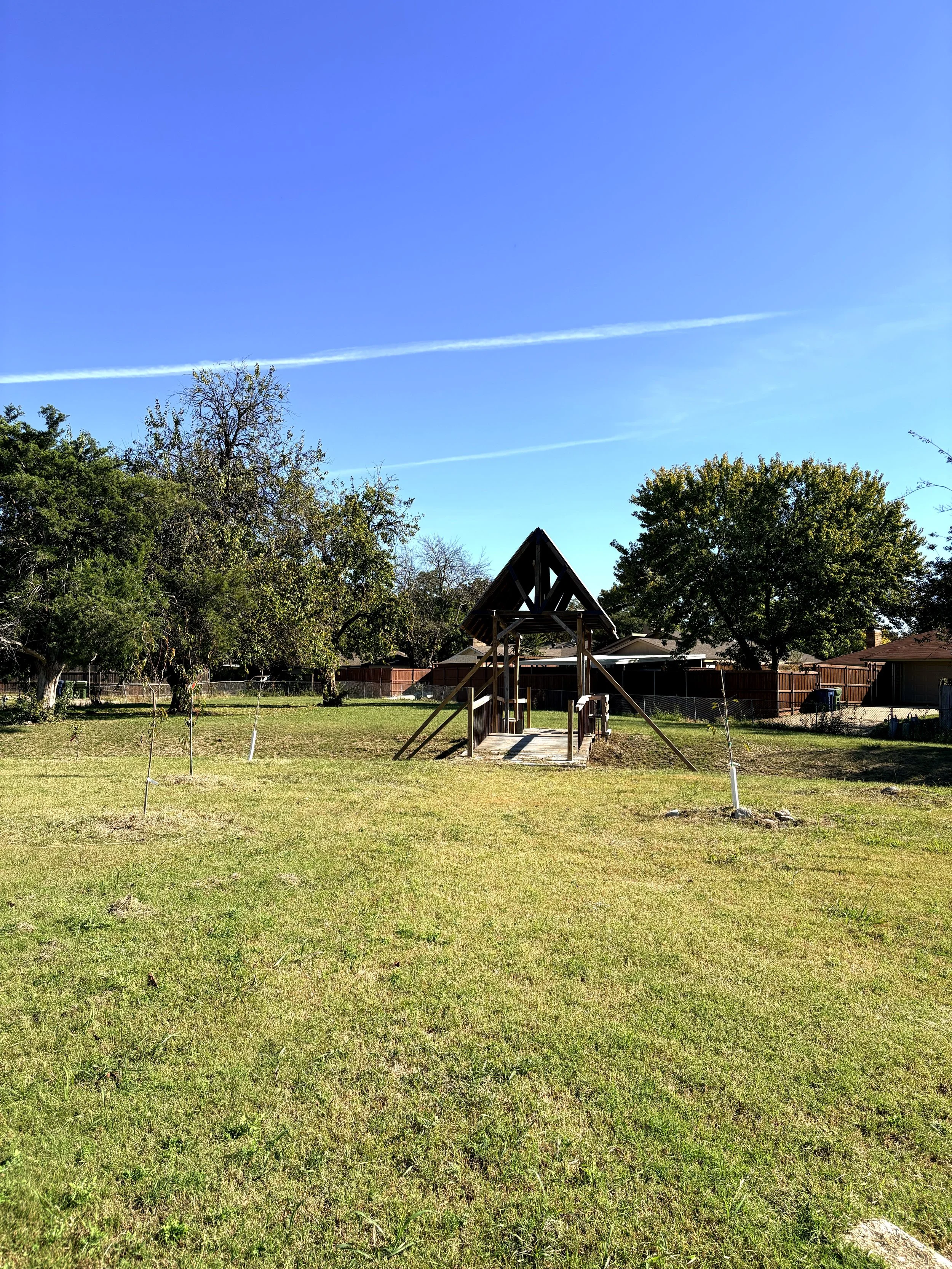
But Don has a plan for all of it. This winter, he’s trenching lines for a permanent irrigation system. He’s collaborating with neighbors and commissioners. He’s preparing to expand the orchard across the bridge that now connects the two halves of the space, lighting the way with solar lamps and dreams of a small fishing pond just beyond.
“We’re not done,” Don says. “We’ve got more to grow.”
“This place has become a balm. For me. For others who’ve lost. For people who just need a safe place to be.”
The Roots Run Deep
Don’s farming roots stretch back to his childhood summers in rural Texas, where his family raised cattle and grew maize, corn, soybeans, and wheat. Today, that knowledge carries forward in every plant and every animal under his care. But this orchard is different.
It’s not about profit. It’s about presence.
“This place has become a balm,” Don shares. “For me. For others who’ve lost. For people who just need a safe place to be.”
The orchard is healing the soil, but perhaps more importantly, it’s healing the soul.
Neighbors walk through and find comfort. Children learn where food comes from. Families remember loved ones not with gravestones, but with blossoms.
Even the wildlife seems to know. Birds nest here now. Pollinators dance among the flowering trees. And when the wind picks up, it rustles through the gumi berries and peach branches like a whispered prayer.
About the author:
Sarah Sikich is Director of Marketing & Communications at The Giving Grove, where she leads storytelling, brand strategy, and national campaigns that amplify the power of community orchards. A longtime advocate for urban horticulture, she blends creativity and data-driven strategy to inspire action and celebrate the growing Giving Grove network.