Korean Natural Farming
Each month, we share expert-led training sessions to help community orchard stewards grow and care for thriving fruit trees. On this page, you’ll find a recorded workshop, a summary of key takeaways, and additional resources to deepen your knowledge. Be sure to explore past workshops for even more insights into urban orcharding best practices!
Interested in attending a workshop? Sign up for our workshop series email list!
Korean Natural Farming (KNF) Background
Established by Cho Han Kyu in Suwon, South Korea as alternatives to conventional commercial inputs
Strengthen biological function of plants to increase productivity and resilience by Cultivating Indigenous Microorganisms (IMOs)
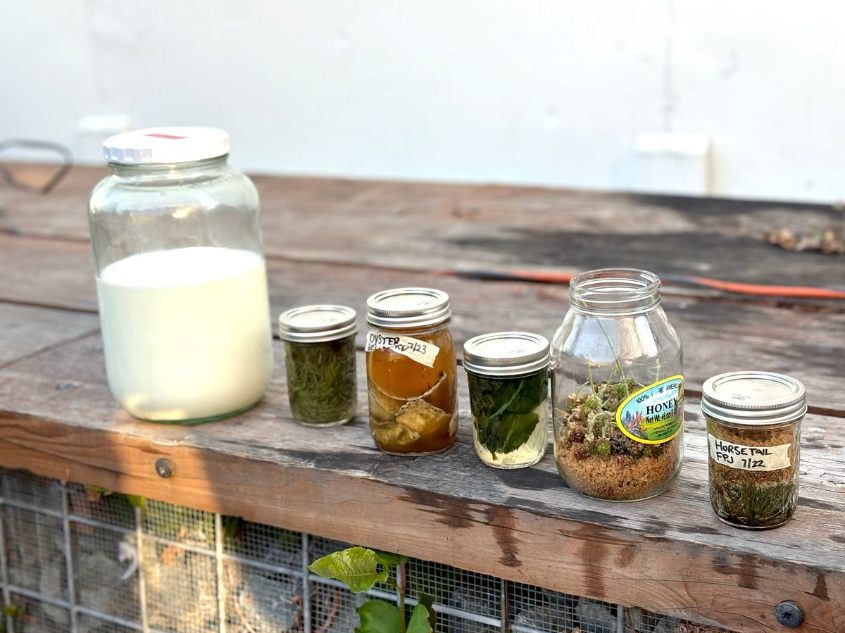
Using fermentation and microbes to make your own soil amendments with local ingredients, weeds from your garden
Use what is local: look around at what is doing well during difficult parts of the season
KNF Preparations:
Lactic Acid Bacteria Culture
Fermented Plant Juice / Water Extracts (Plant Teas)
Indigenous Micro-Organisms (IMO)
Apple Cider Vinegar Extracts
Basic Principles
Trees are designed to live in conjunction with other species of plants and microbes to provide
Plants live in symbiotically with soil microbes & other plant species to provide fertile soils
Organic methods don’t work well without attention to nutrients & minerals!!!
Microbes create accessible nutrients through soil food web
Provide support and food sources for microbial to create healthy trees - mimic the forest
Benefits of Korean Natural Farming
Save $$ on Amendments
Increased Yields & Less Maintenance Long-Term for Trees
Reduced Disease & Pest Issues
Fuel for Living Soils
Home-Made & Uses Local Resources
Positive Impacts on Climate Change
Leibig’s Law of the Minimum
States that the growth of an organism is limited by the most scarce resource
How this works with trees: whatever you’re missing has the most effect, even with “trace minerals” at the very smallest amounts
This diagram represents missing resources that a tree has; the smallest amounts of missing elements have large effects on the ultimate health outcomes of the tree
Plant Teas / Water Extracts (Plant Fertilizer):
Using fermentation of vigorous growing plants extracts biochemicals, nutrients and growth hormones in plants via water
Used to stimulate plant growth and enhance soil health
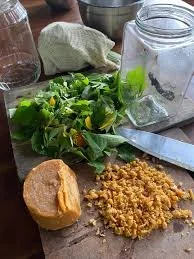
Take the growing tips of healthy plants—vegetables, herbs, or weeds, mixing them with brown sugar, and allowing them to ferment.
Recipe Instructions
Harvest plants early in morning, ideally before direct sun
Fill bucket ¾ full with plant material of choice and then add water to fill; loosely cover to exclude bugs
Allow to sit anywhere from 2 days to 4 weeks; the longer it sits, the stronger the solution will be
Add equal weight of brown sugar to liquid make shelf-stable
Dilute and apply to leaves or directly on soil
***Note: Water extracts will probably smell very bad, especially comfrey ***
Fermented Plant Juice (Creates Stronger, Shelf-Stable Liquid Fertilizer)
Use fermentation of vigorous growing plants extracts biochemicals, nutrients and growth hormones in plants via water
Used to stimulate plant growth and enhance soil health
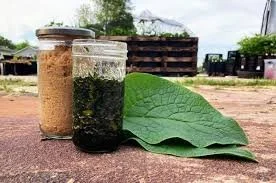
Take the growing tips of healthy plants—vegetables, herbs, or weeds, mixing them with brown sugar, and allowing them to ferment.
Start with 3 parts plant, 2 parts brown sugar; 1:1 wet material
Use weight to hold plant material down, cover top surface with towel
Allow to ferment for 1 week and strain liquid by gravity
Plant Lists for Ferment Plant Juice / Plant Teas
Use plants with deep taproots, highly nutritious, fast-growing and vigorous:
Comfrey - Nutrients, Minerals
Dandelion - Calcium
Nettles - Minerals
Horsetail - Silica
Fruit Thinnings
Garlic - Antifungal, Absorption
Purslane - Omega-3s
Knotweed - Immune Boost
Docks - Nutrients, Minerals
Quackgrass - Growth Hormones
Lactic Acid Bacteria Culture (Fungicide & Soil Conditioner)
Harnesses lactic acid bacteria (LAB) from environment for microbial balance on trees
Used as natural fungicide, similar to hydrogen peroxide
LAB multiply at room temperature faster than any other bacteria
One of the most powerful microbes on earth
Can survive with or without oxygen present, withstand near boiling temperatures
Recipe
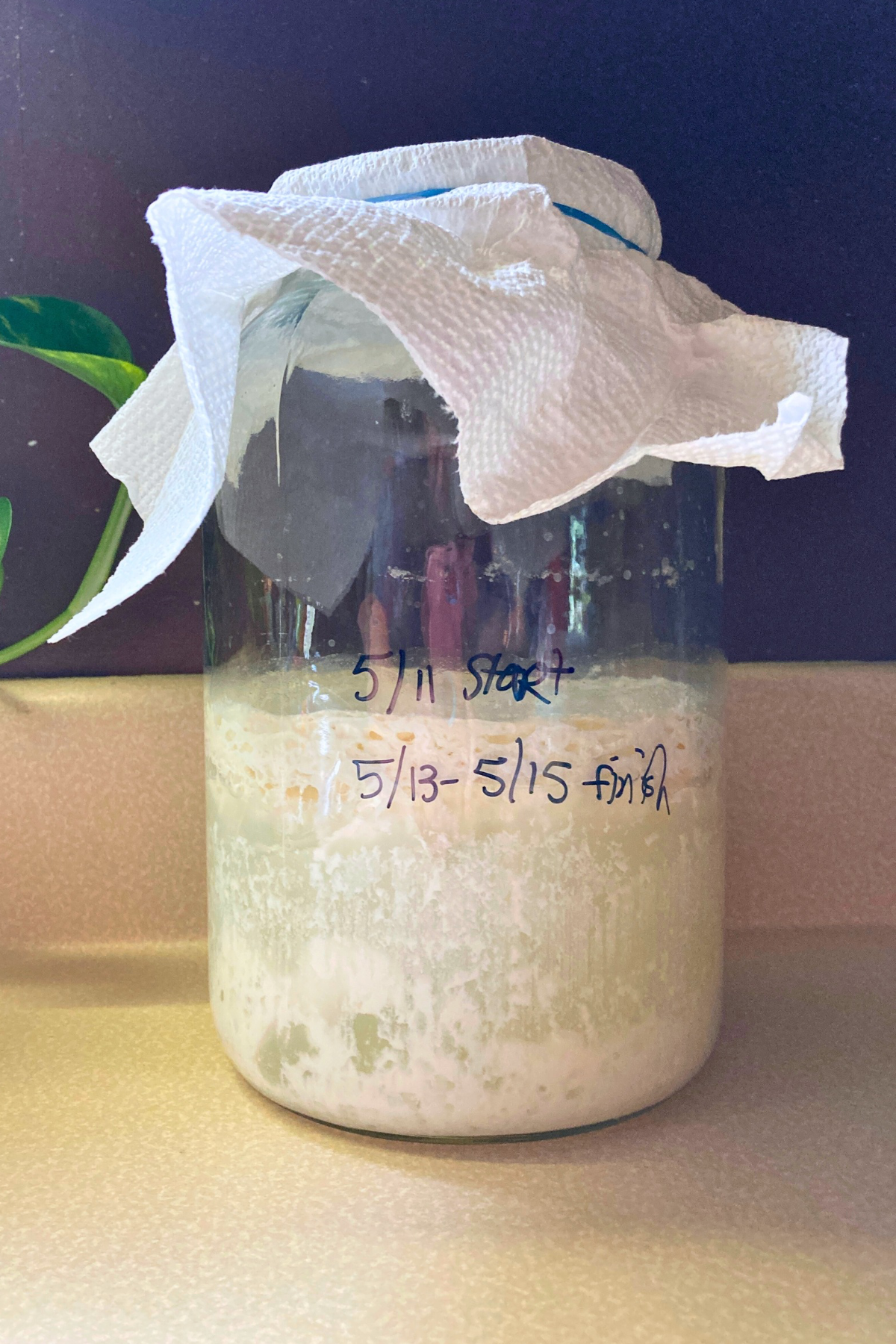
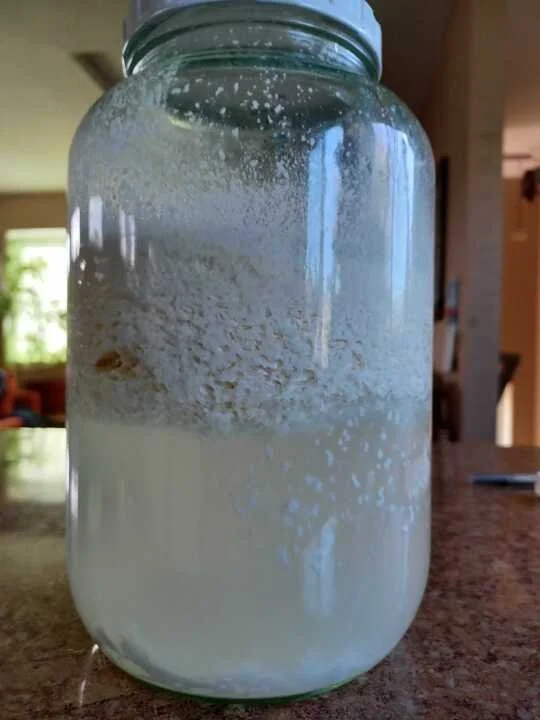
Rinse Rice Water: Wash 2 cups of uncooked rice into a clean jar, capture 2nd or 3rd water, cover with paper towel
Capture Wild LAB: Allow to sit for 3 - 5 days (white foam on top)
Milk Fermentation: Add milk and ferment;
Separate Curds & Whey: Strain off curds and retain liquid (whey)
Harvest & Store: Store in fridge or add equal weight (of liquid) brown sugar for long-term storage
For more detailed instructions, see:
Two Methods of Application:
Direct to Soil (Add to Water)
Foliar Spray on Leaves
Dilution rates depend on material amount and extraction methods/timeline, soil conditions
Beware of applying too concentrated rates
Homeopathic principles apply - small concentrations can produce large results
Apply on regular schedule, every week or other week
Dilution Rates
Water Extracts:
(2 Days Ferment): 1: 10 - 1:30 ratio (1 ½ cup per gallon - 2 cups per gallon)
Fermented Plant Juice:
1:500 - (½ tbs/gal; 2 tbsp / 4 gallon)
1:1000 - (¼ tbs/gal; 1 tbsp / 4 gallon)
Lactic Acid Bacteria:
1:1000 - (¼ tablespoon/gallon)
ACV Extraction:
1:500 (¼ tablespoon per gallon)
Reference Materials
Natural Farming Agriculture Materials by Cho Ju-Young
Regenerative Growers Guide to Garden Amendments by Nigel Palmer
Korean Natural Farming Guide - University of Hawaii
Plant Teas Handout by Michael Phillips
Holistic Orchard by Michael Phillips
Mycorrhizae Planet by Michael Phillips